On May 6th, 1935, President Franklin Delano Roosevelt established the Works Progress Administration (WPA) as part of his “New Deal” intervention to address the Great Depression. Though most of the WPA’s work consisted of constructing buildings and other forms of infrastructure, the agency also dedicated a portion of its resources to the new Federal Writers’ Project and Historical Records Survey, both of which worked to record the stories of Americans who had played important roles in the nation’s history. These programs allowed the government to document the experiences of former slaves who lived through reconstruction, ordinary workers from all walks of life, and those who had lived through notable events like the Chicago fire of 1871 (you can read more about the Federal Writers’ Project here). In this capacity, the writers and surveyors of the WPA worked to record important stories that otherwise would have been lost to time, stories that have made America what it is today, for better and for worse.
There is something about recording stories that seems important enough to prioritize, even during a crisis like the Great Depression. At its peak, the Federal Writers’ Project employed about 6,500 persons, preserving their stories for the generations to come. Given that the San Antonio People Project currently consists of ten people working with a limited amount of spare time, it would be simply inaccurate to compare the two organizations without recognizing the difference in scale. However, despite the difference of magnitude, I see the San Antonio People Project as continuing in the same vein as the Federal Writers’ Project. Though we (thankfully) do not know any former slaves to interview, there are still people in our community who face incredible challenges and who have lived through difficult times; it is an honor to record their stories. Though ”ordinary life” today is filled with quite a few things that would be considered “extraordinary” or even “miraculous” a century ago, people today still wrestle with many of the same personal challenges as their predecessors; it is an honor to record their stories. Though we have yet to gain the perspective of history on current events, it seems at the very least probable that the events of the past year related to the coronavirus pandemic will go alongside the Great Depression as some of the darker times in world history; it is an honor to tell the stories of those who have lived through it.
The San Antonio People Project has always left me feeling grateful to be a part of the community of San Antonio
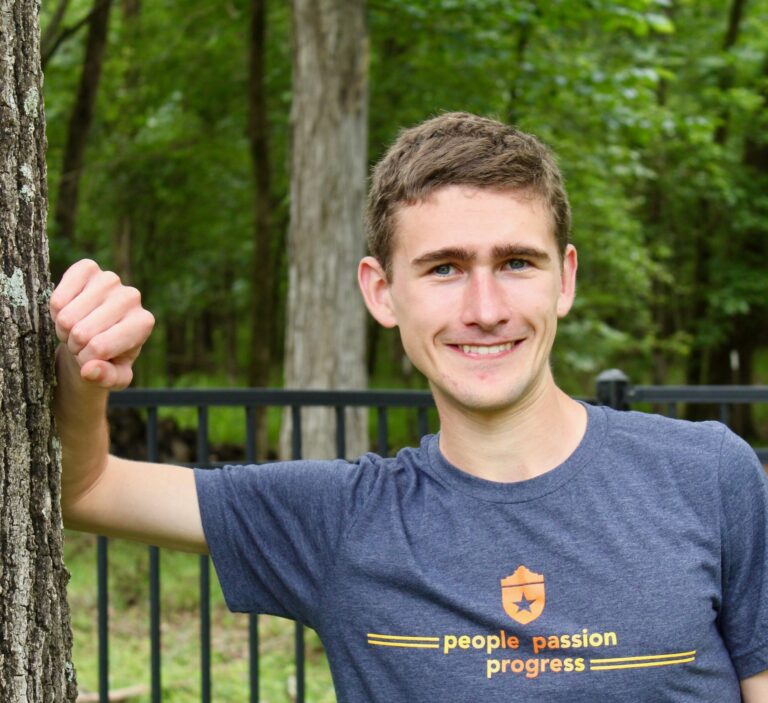
-Will Young
It is important to note that part of the goal of the WPA was to provide a living wage for those who had fallen on hard times during the Great Depression, but human experience proves time and time again that money is not the only form of compensation, and perhaps not even the most valuable. The San Antonio People Project has always left me feeling grateful to be a part of the community of San Antonio and has helped me keep things in perspective when life seems to be going wrong (at least from my limited perspective). When I interview a surgeon, she is not dwelling on that test in medical school she wished had gone better. When I interview my neighbors who lost everything they owned in a house fire years ago, they are thankful for the travels they got to experience with nothing to hold them back. When I interview a fourth year medical student about to transition into residency, I see that there is some small light at the end of the long educational tunnel.
In sum, the San Antonio People Project has given back to me as much or more than I have given to it, and I am very thankful. I would like to thank all of the incredible people in San Antonio who have agreed to interview and share their stories, and I would like to thank my SAPP colleague-mentor-friends who make the process so much fun, especially Dr. Shah, without whom there would be no SAPP. As we move into the next year, I for one am very much looking forward to the new stories that will be told. I hope you are too.
Story: Will Young, Photo: SAPP