
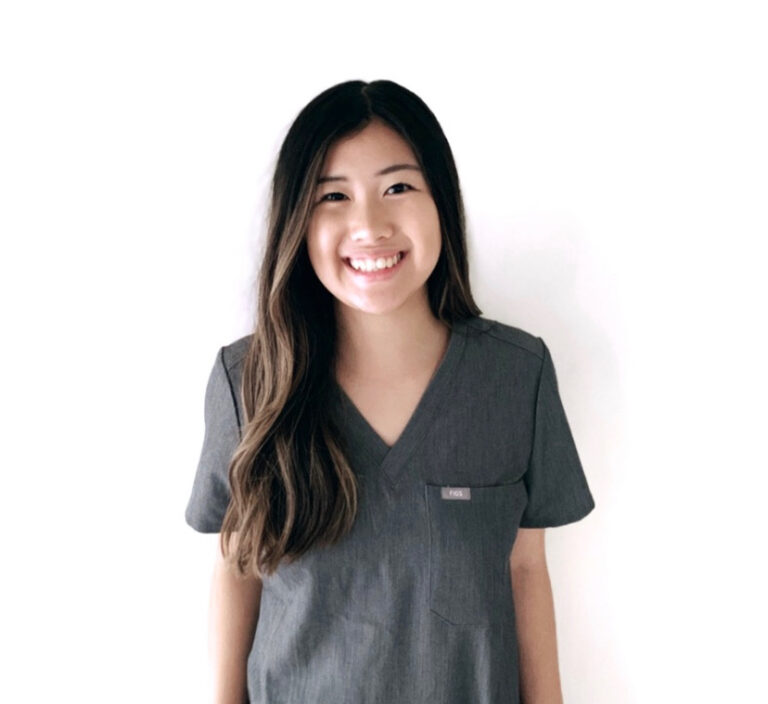
As a daughter of two immigrants from Vietnam, I never would have imagined that a career in medicine, let alone in dermatology, was in the cards for me. My dad was diagnosed with liver cancer when I was in high school, and I worked two jobs at the time to help financially support my family of six. Despite the tragedy of my dad’s illness, it taught me a newfound appreciation for the struggles that many people face in life and not only developed my interest in medicine but my commitment to underserved communities. When I entered medical school, I was determined to start volunteering at our student-run free clinics. In fact, one of the reasons I chose to attend Long School of Medicine was for the robust student-run free clinic system and the vast opportunities to give back to the community. It was purely coincidental that the first clinic I volunteered at was the one which entirely changed my plans for the future.
Growing up, I never thought that I would discover my future career in the basement of a church in downtown San Antonio. Yet, it was there that I found the Travis Park Clinic, a student-run free clinic where I unearthed a gem of a specialty called dermatology. From the first time I spent volunteering at the clinic, I immediately became interested in the specialty and found myself returning multiple times throughout the year. Six months later, I became the clinic coordinator at Travis Park and fully immersed myself in the experience. It was through this role that I grew to love dermatology and knew that this was the field I wanted to pursue.
To the naked eye, dermatology is classically viewed as a field with excellent pay and lifestyle at the expense of treating just acne and rashes. To me, I have come to learn that dermatology is a unique art form where patients can present with complex challenges, and the dermatologist has the opportunity to create a masterpiece through careful examination and treatment. From watching dermatologists perform intricate surgical procedures to managing debilitating conditions like epidermolysis bullosa, I have gained a deeper appreciation for the work dermatologists do. This is especially true when I have been able to witness the effect it can have on patients’ lives.
One patient in particular who I will never forget was a middle-aged female patient who had extensive, disfiguring basal cell carcinoma on her face. She constantly wore a mask to hide the large nodules scattered on her left cheek and a bandaid over her glabella to hide the infiltrative ulcer that went down to her bone. She had a son in elementary school and admitted she felt ashamed he had to see her this way, constantly hiding her face from the world. It was through Travis Park that she was able to get curative treatment with a multidisciplinary surgical team and ultimately show her face again. This experience showed me that skin conditions can have a significant impact on self-esteem and quality of life, and it is a privilege to see patients not only heal physically but also feel more confident in their own skin.
The more I learn about dermatology, the more I am fascinated and drawn to the field. The opportunities I gained through the Travis Park Clinic gave me a glimpse of what my future could entail. I am excited to embark on this career path and continue to grow and develop as a dermatologist, all because of those eager steps into the basement of a church four years ago.