
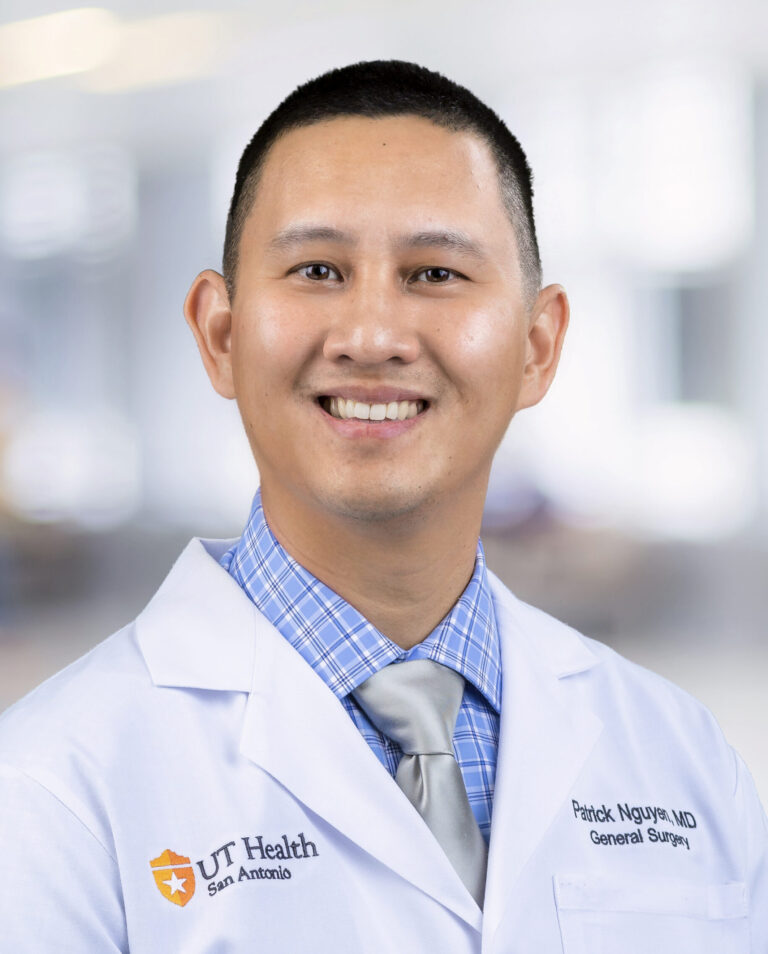
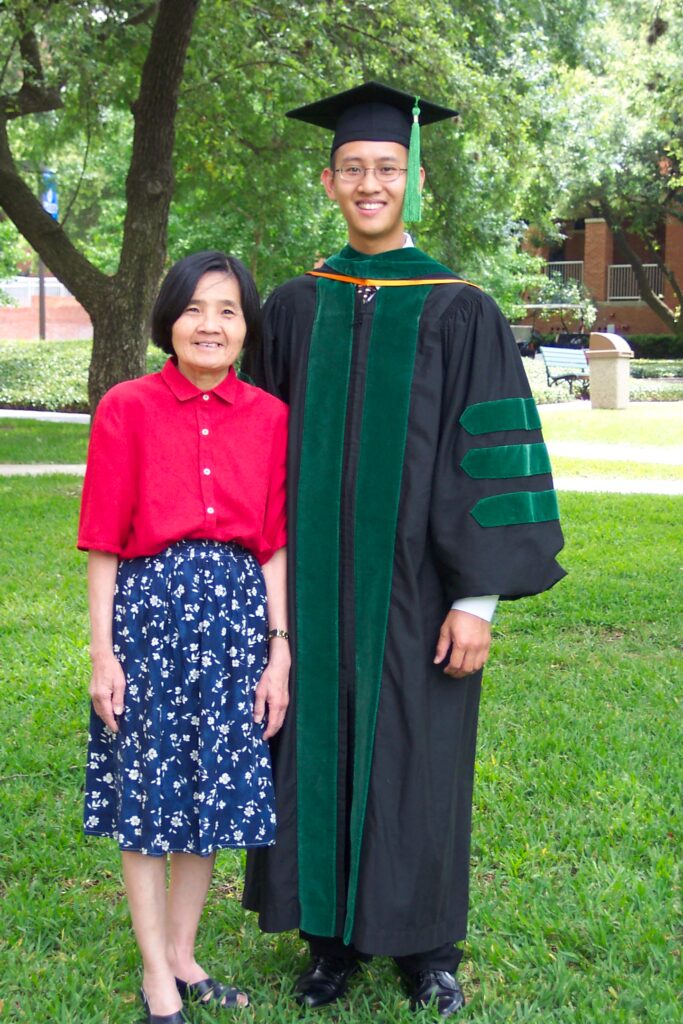
My upbringing was different from most people. I was born in Brussels, Belgium and lived there until the age of nine. My parents were divorced, so I was raised by a single mom who was an outpatient pulmonologist in Belgium. One summer, she made the decision to send me and my sister to America for a better life and to be raised by my older grandparents who were retired and lived in Austin, Texas. They were immigrants three times over, moving from Vietnam to Belgium, Belgium to Canada, then Canada to America. Interestingly at this time, I had to learn to not only speak English to be able to survive in America but also learn to speak Vietnamese in order to converse with my grandparents. As someone who grew up in Austin, it was an expectation in my family to do well and go to college at the University of Texas at Austin. That’s where I eventually went for my undergraduate education with the intention of pursuing medicine as a career after. I always knew since I was a little kid that I wanted to be a doctor. There was nothing else that I had ever considered because my mom played a crucial role in my upbringing – she was a physician and served as my influence to pursue medicine. I decided to go to UT Health San Antonio because I wanted to be closer to Austin in order to be near my grandparents.
When I started medical school, I had the intention of becoming either an internist or a family medicine physician. Those were the ideas that I had because it was the only exposure to medicine I got prior to entering medical school. It wasn’t until I did my surgery clerkship that I fell in love with the specialty. The resident mentors and the faculty mentors I worked with inspired me to become a surgeon. It was fun being able to work with my hands and operate on patients, but it was also rewarding seeing great surgical outcomes with patients getting better quickly. Those were my favorite aspects about surgery and what ultimately led me to become a surgeon. I had the opportunity to train in San Antonio for my surgery residency, and it was by chance that I ended up as a faculty member here. Through all five years of my residency training, it was always my goal to go back to Austin because my family and my wife’s family was there. I had never even considered becoming an academic surgeon. At the time, my job options in Austin were very limited, and I didn’t want to choose a job I’d be unhappy with just for the location. Fortunately, there was an academic job opening in San Antonio and because I enjoyed teaching and loved the people I met during my training, it made sense to stay. It’s funny to think about my journey of how I ended up as an academic surgeon, but I like to think that things happen for a reason.
One great aspect of my job now is that I am not only first and foremost a clinician but also a teacher – a teacher to my residents and to my students. Although it may seem hard, it actually doesn’t take much effort to teach. This is because I always try to incorporate teaching in every aspect of my job whether it be seeing a patient in clinic or working in the operating room. After some time, it becomes second nature. It’s the small things that really create opportunities for students and residents to learn. For example, I will allow my students to surgically close port holes on patients in the operating room, and over time, I see the advancement of their surgical skills. In my teaching philosophy, it is imperative for my students to just do it and with time, they will learn. I have learned over the years that the impact educators have on our learners is exceptionally powerful – positive and negative. One very negative interaction with a surgeon may sway how they feel about every surgeon for the rest of their lives and vice versa. It is this very reason that I make an effort in my practice to try and make the experience positive for my learners in every aspect.
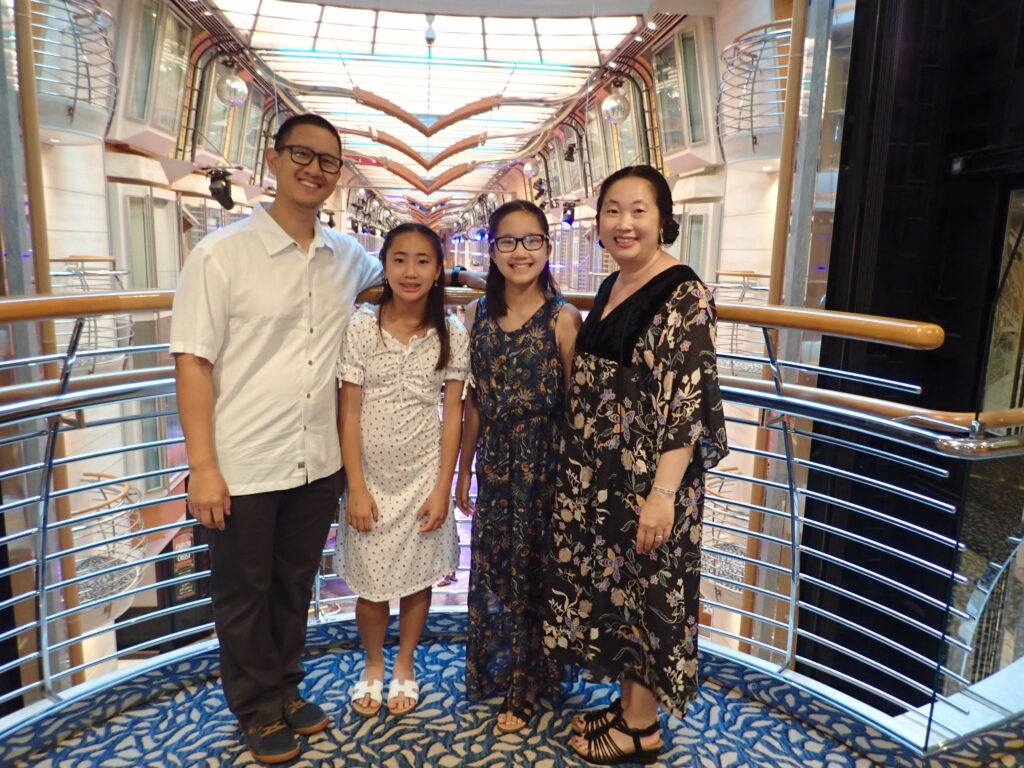
Although I enjoy my job, being a surgeon can be difficult because it is very time intensive. However, there are also many other non-surgical specialties that also work very hard and have tough hours too. At the end of the day, it takes extra effort to create a good work-life balance that works for you. I have a wife and two daughters so making time for them is a priority for me. For example, if I know that one of my daughters is having a recital coming up, I put it on my calendar and purposefully craft my schedule around that to ensure that I can attend. At the same time, it is important for me to have good communication with family to set expectations that if a surgical emergency comes up, I may have to tend to that patient’s needs. Good communication has become such a vital tool between not just my family but my work colleagues as well. It’s a philosophy of mine that while it is important to work really hard in your professional practice, you have to work just as hard with your home life too. It doesn’t matter if you’re a surgeon or in another specialty, it’s possible to create that work-life balance where your work doesn’t have to consume your whole life. Of course, there are times when things can be stressful, and this will happen with every specialty – sometimes there are bad outcomes in surgery and you have to communicate with a patient’s family about the outcome; sometimes as a clerkship director, I have students who are unhappy with how the clerkship is organized. It’s not uncommon to experience these stressors, but I believe it is important to have someone to talk to, whether it be your colleagues or partners. I talk to my wife often about my difficulties, and she has been a great support system in listening to my problems and offering words of encouragement. One important aspect of becoming a physician is being able to take care of yourself because that plays a role in being able to care for others.

Story: Marie Vu, Photographs: Courtesy of Dr. Patrick Nguyen