

I’m from South Texas, originally from Corpus, and I knew I wanted to go to med school because I liked math and science. I did summer programs through my college, UT PanAm in the valley, and they had a program with UTMB where you could take courses to prepare for the MCAT during the day and then in the afternoon you would spend time with a randomly assigned physician. Most of my friends got assigned to primary care physicians, pediatricians and things like that. By chance I got assigned to a plastic surgeon, so I shadowed them that summer and I was like this is the coolest thing! I saw them do very complex surgeries. They had a patient that had a basal cell carcinoma that took up half of their face so the surgeons did a reconstruction. I was in awe of what these people could do. My only understanding of plastic surgery at that time was what you see in magazines about celebrities, but plastic surgery is so much more than that. And so that was my initial draw to plastic surgery.
As an undergrad student, you have this loose image of what a physician is and what they do. I initially thought I was going to go into pediatric medicine because I liked it and I didn’t know anything about medicine yet. In med school, I liked all of the medicine; I liked cardiology, internal medicine, allergy and immunology. I was drawn to surgery because I like to work with my hands, and I was in the OR for hours that just passed by and I didn’t realize how long I’d been in there, particularly so with plastic surgery.
In plastic surgery training you do all the things in plastic surgery head to toe so you can do hand surgery and cleft lip and palate reconstruction; however, the thing that I felt was the most interesting and the thing that I thought that I could be the best at was breast reconstruction, particularly with microsurgery. Microsurgery is a little subset within plastic surgery. It’s a technique that’s used to close wounds, for example you can use microsurgery for a scalp defect or to reattach fingers. We have the ability to do these small detailed procedures with breast reconstruction. We use the tissue from the tummy and we transplant that to the chest area and we sew small blood vessels together. I like how detailed and precise breast reconstruction is and how it has an aesthetic component. Plastic surgeons sometimes refer to themselves as sculptors because of the aesthetic and cosmetic aspects of their specialty, but it’s different with breast reconstruction. You have the tissue that’s already there or you have an implant that you can use, but with breast reconstruction the breast tissue has been removed. If you’re gonna use the analogy of a sculptor, I have to harvest the stone (new tissue) and I have to do it very carefully in a way that I don’t damage the surrounding stone (tissue). But then I take that stone and then I carve it into the statue so it’s not just carving the statue, but I also have to obtain the stone and that’s the extra step in reconstruction. Furthermore, breast reconstruction is done for breast cancer survivors. These women have been at extreme physical and emotional lows especially with self esteem and coming to terms with how their new body looks and feels. It’s a very vulnerable time in their lives, and I have to thank my mentors in med school and residency for teaching me how to properly handle the emotional aspect of this specialty. I view myself as a teacher, educating the patient and advocating for the patient. I present them with the information and allow them to make the best decision for themselves, I don’t tell them what to do. I think the biggest comfort that patients get when they come to see a plastic surgeon is that they have the reassurance that there are options and they’re not at a dead end with no options. I’ve had patients that come from San Antonio or come from outside of San Antonio, even all over the country and sometimes they’ve been told “You don’t have any options.” They’ve had radiation, a mastectomy, and now this contracted scar on the chest and their doctor told them there is nothing left to do. Being able to tell that person that we do have some options available and there is a plan A, plan B, plan C, etc. is life changing. This really goes back to one of my things that I really liked about plastic surgeons – they always have a plan and a backup plan and a tertiary plan. We kind of consider ourselves like the Navy Seals of medicine. When things really go bad – for example, you have a cardiothoracic surgeon that has a terrible complication with a surgery and they’re at their wits end – they call a plastic surgeon to fix it.
I did med school in Houston at Baylor College of Medicine, but all of my residency training was in the Northeast. So I came back to Texas to be close to home and for the warm weather. My first job out of residency training was in private practice here in San Antonio. I didn’t know where my career was going to lead initially. I knew I wanted to be in a practice where the types of surgeries that we did were primarily breast reconstruction and I was with them for six years.
I didn’t plan to start my own practice when I first started, but this is what I saw I needed to do for myself and my patients. I wanted to practice medicine the way that I best saw fit for my patients and I felt the only way to do that was to have my own practice.
It’s really interesting what’s happening in medicine, a lot of medicine is going corporate and smaller practices that are private practices are being bought out by private equity groups. There are less and less locally owned privately owned practices in all specialties of medicine. Plastic surgery is probably one of the last of the safe havens of the private practitioner in medicine. In my training experience and seeing other practitioners that were involved in hospital systems and health networks and other types of practices; I felt that the practitioner essentially becomes a cog in a wheel and the patients become a number. That’s something that doesn’t fit with my value system. I really wanted to have the ability to, for example, do pro bono surgery if I wanted to, without having to run it past a higher up person and get it approved for the financial quarter. If I want to spend more time with my family, I can do less surgery and spend more quality time with them. I can control the number of patients I see in a day, giving patients the opportunity to build a relationship of trust with me and making sure they can ask all of their questions and not feel rushed.
The hardest part of building your own practice … well it’s all hard really, but the hardest part I guess is finding balance. I’m married. I have a baby. It’s easy to get consumed in building your practice and building the business because it’s like my second child, it’s a living, breathing thing. I wake up super early, not because of an alarm but because I’m anxious and I want to get things done. So I’m up at 4:30 in the morning working, putting together spreadsheets thinking of all of the To Do lists and then again late in the evening trying to do everything, and this isn’t even with patients yet; this is just the building of the practice. I have to balance that with my commitments to take care of my family, to be a good husband and a good father. My wife has been really good about that, about helping me prioritize what I need to do and switching between tasks. The hardest part is finding balance in your life because it keeps you grounded and keeps you safe.
I’ve read a couple of different books that I think are good for anybody to read, but especially if you’re going to start your own business or if you’re going to be in any type of leadership position. As a physician, you are going to be a team leader. The first book I would recommend is “Extreme Ownership” by Jocko Willink. He’s a former Navy SEAL Commander. The second book that I recommend is “Start With Why” by Simon Sinek. Those are two really good books that I think anyone who’s going to be in a leadership position would really take a lot of insight from. The number one take home point from these books with regards to teamwork is to surround yourself with good people. If you get a good system in place with good people, then then you can steer the ship in whichever direction you want to go as a team. And if everybody’s rowing in the same direction, then you can really accomplish some really awesome things. So that’s what was most important to me. We’ve built something here that I’m very proud of. I’ve recruited some excellent, excellent people. We have Rebecca, our PA, and Heather, who’s our office manager and I’ve known these people for a very long time. I know their ethics, their morals, their commitment to patient care, their team member approach. It’s something that we all share, and I think that’s something that patients will see and also appreciate when it comes to how they’re taken care of.
Being a physician of any specialty is a really long and bumpy journey. My best advice for premedical and medical students is to take it one day at a time. You have a loose idea of what your goals are, but just try to enjoy every moment along the way. I really enjoyed my cardiology and internal medicine rotations and I learned a ton of helpful information regardless of choosing plastic surgery. The more you know, the better physician you’ll be in the end. One of my attendings in training said, “First you’re a doctor, then you’re a surgeon, and lastly, you’re a plastic surgeon.” We always take care of the patient’s baseline needs first, not just what the specialty calls for. I’m not going to do surgery on that person until they are in good health and ready for surgery. Be a physician first.
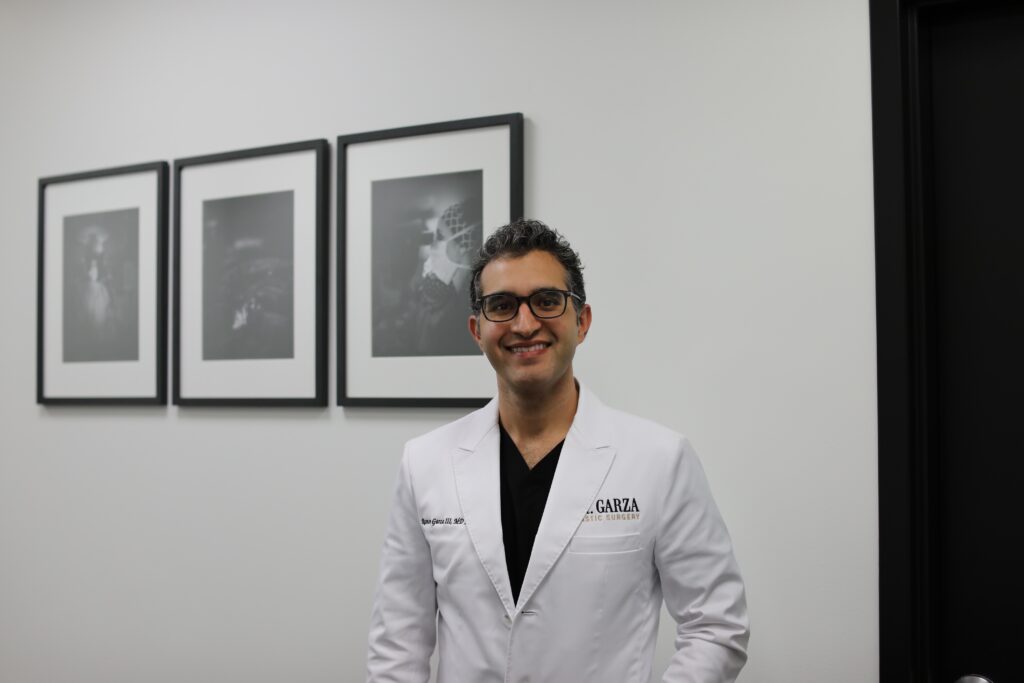

Story: Dr. Ramon Garza III and Madeline Neff Photographs: Dr. Garza and team