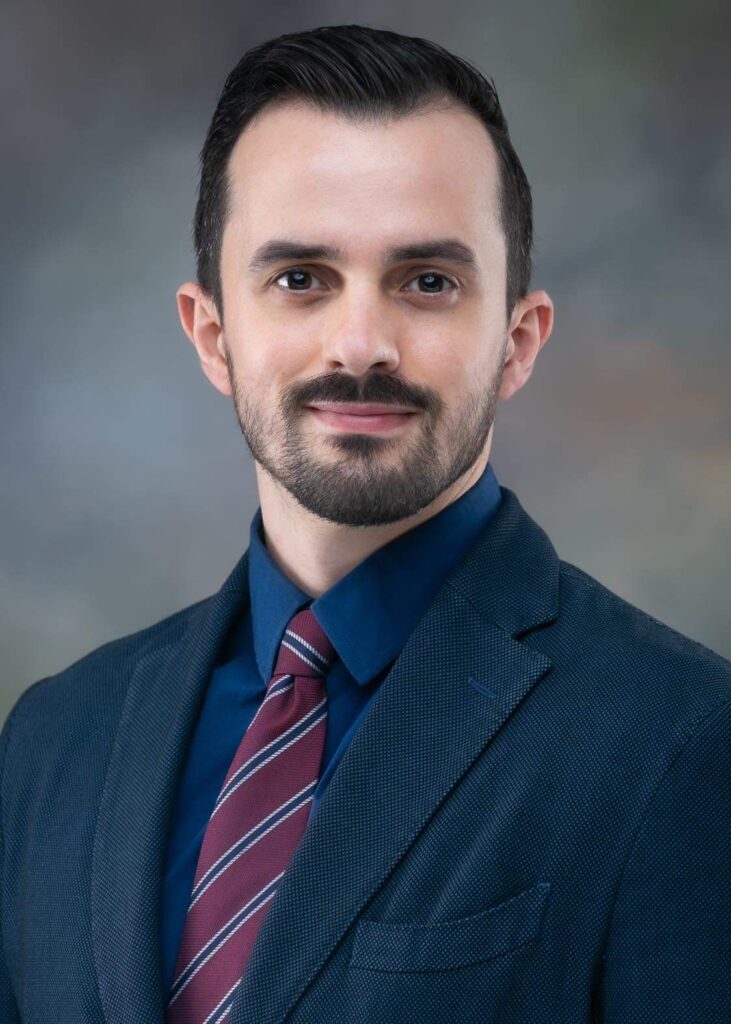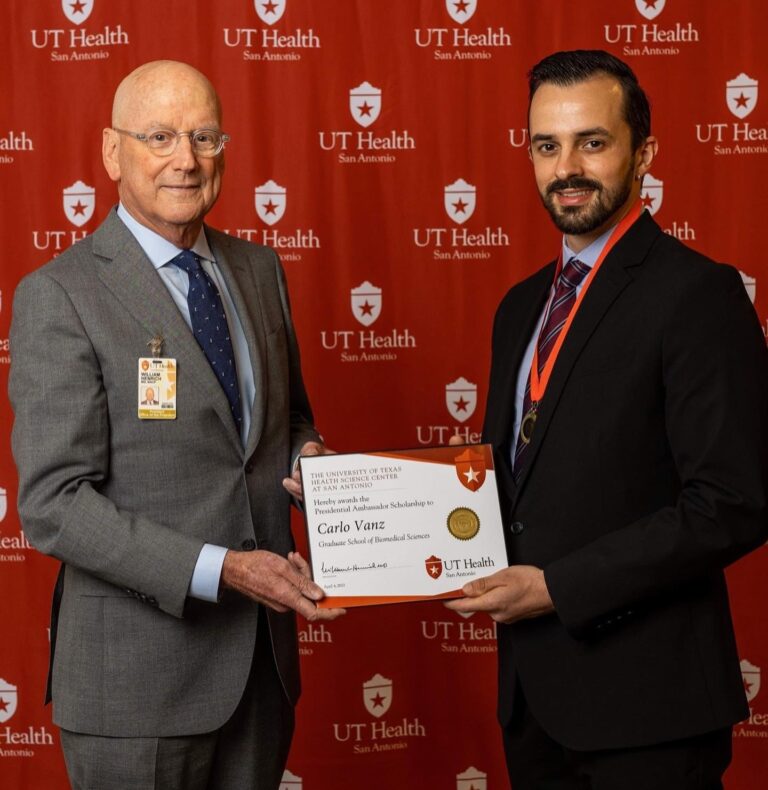
I was born and raised in Italy, with the rest of my family consisting of my parents, two brothers, and one sister. My parents both emphasized education and encouraged me to study abroad, which led me to Ireland, the United States, and Australia while I was still in high school. My mom, a pediatrician, was the one who first ignited my interest in the medical field. As a junior in high school, I did an entire semester abroad in Australia, which really helped me practice my English skills and convinced me that I wanted to go abroad for the rest of my education and research pursuits. Since I thought I wanted to be a doctor, I really wanted to go to the United States for my education. I ended up enrolling in classes at Lamar University in Beaumont, Texas, which is how I came to the States.
Though I started out as a premedical student, the lab experiences that I had along the way really appealed to me, and as I looked into it more, I realized that I was more interested in medical research than I was in practicing medicine. With the help of Dr. Ashwini Kucknoor, my mentor at the time, I began to shift toward life science research, and I quickly knew that I wanted to continue along that path.
Happy with my change in course, I started applying to doctorate programs during my senior year. UT Health San Antonio was actually the last one I applied for, since the deadline was later than the others. My undergraduate mentor’s husband worked there, and since she encouraged me to apply, I thought, “why not do one more application?”. I was very glad that I did: I loved UT San Antonio from the minute that I interviewed here. The feel was smaller than Lamar in terms of the number of students, but unlike other programs, this one was entirely focused on the life sciences. The microbiology and immunology department had great facilities and people working in it, the school had a supportive environment, and the principal investigators (PIs) were working on very interesting projects. My girlfriend got into a speech and language pathology program in Austin, and I was accepted to UT Health San Antonio, so it was great that we could still live near each other. It all worked out really well.
After I was accepted at UT, I still had a one-year gap to fill after graduating from college. One of my friends, who is now a medical student at McGovern Medical School, suggested that I do an MBA program, as I have always been interested in business and translating research into the real world. Thus, two weeks after graduating, I found myself taking classes in finance, accounting, and company management. Learning the intricacies of business was difficult at first, since it is fairly distinct from biology, but I found business as a subject to be very logical and structured, which I liked. After finishing my MBA, I started at UT Health San Antonio within the next week, so you could say that I filled that time as much as I could.
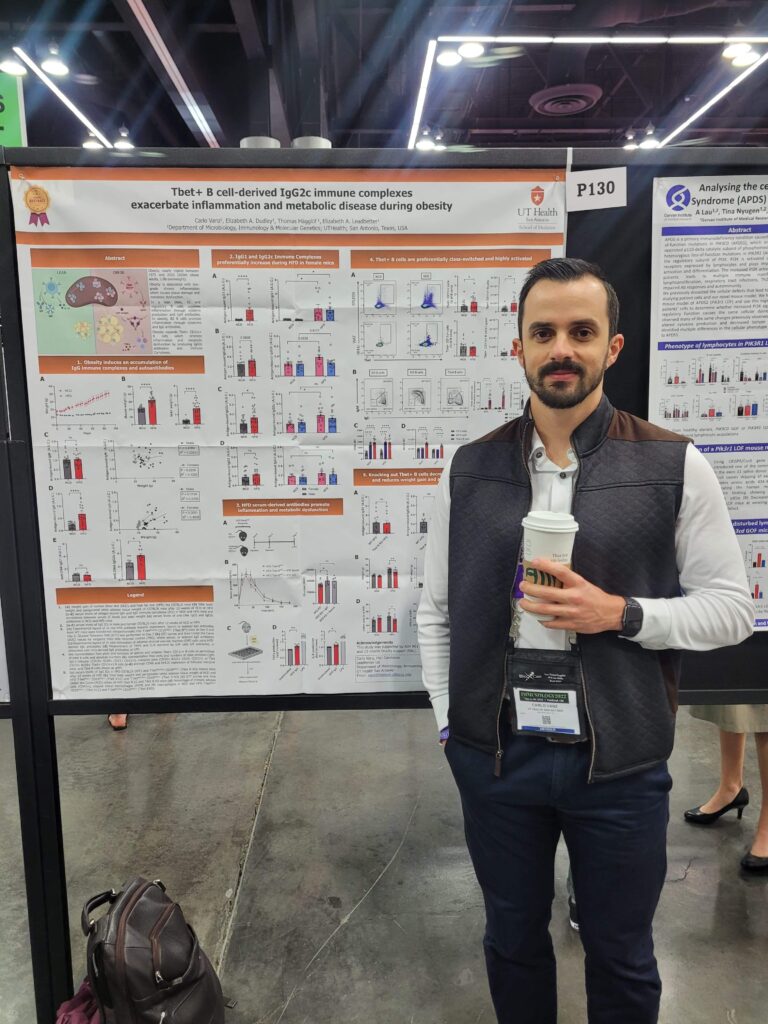
The Ph.D program here is structured such that during the first two years you take several classes to train as a researcher, but after that, almost all of your time is spent doing research in the lab. I am now in my third year working in Dr. Elizabeth Leadbetter’s lab, and I couldn’t have asked for a better mentor and lab. Dr. Leadbetter has provided me with amazing mentorship and support to help guide me through my research, while also giving me enough freedom to manage my work. My research focuses on the relationship between the immune system and metabolism in obesity using a mouse model. In particular, we are investigating the role of B cells and how they relate to chronic inflammatory states, such as those observed in obesity. The long-term goal is to find new ways to treat or even prevent the development of inflammation in obese patients, thus blocking its downstream effects in promoting conditions such as type 2 diabetes, a disease that affects thousands of people in San Antonio and across the country. These sorts of projects are by their nature very narrowly focused, but one thing I have learned as a researcher is that regardless of how niche your project is, you’ll learn to love it, provided you are in a supportive environment. Of course, the huge potential for this knowledge to change lives for the better also helps tremendously.
I did not leave my business interests behind after I finished my MBA. When I am not in the lab, I work as an intern at UT Health’s Office of Technology Commercialization. The office exists to help people from the university commercialize new inventions, whether by starting a company or licensing such technologies to existing businesses. Usually we work with physicians or principal investigators who come to the office with everything from new medical devices, to cancer therapies, to assays for neurodegenerative diseases. When an invention is disclosed to the office, I help facilitate the initial evaluation by producing a Technology Management Report, or TMR. The TMR describes what the invention is, how it works, preliminary data as to its effectiveness, and any relevant basic science background information. It also analyzes the technology commercialization potential based on market size, existing competitors, and current trends and unmet needs in the field, and it reviews the current intellectual property landscape to determine whether there is any equivalent patent or publication that already exists. When I am done with the TMR, I present it to my bosses and the inventor. If we decide to move forward, we then usually apply for a patent and meet with lawyers to discuss next steps. As you might imagine, with about 50-60 hours per week spent in the lab, there is not an abundance of time for other pursuits, but the work is really fun and I get a lot out of it.