Juan Reyes: A Voice for ALS

“I'm not angry; I resent the fact that I'm unable to do many physical things that I used to, but I live what in my opinion is a blessed life. None of us are guaranteed the next day.”

My name is Juan Reyes, and I was diagnosed with Amyotrophic Lateral Sclerosis (ALS) five and a half years ago. I experienced some initial weakness and wasting away of muscles in my left hand but I ignored it at the time, believing it was secondary to other conditions that I have, specifically type 2 diabetes. My primary care physician became concerned when I began experiencing the same issues with my right hand. So he referred me to a neurologist who ran a battery of tests, all of which ended up being inconclusive. My primary care physician was not satisfied with that, and so through the recommendation of our friend and neighbor, I sought out another neurologist who on October 14th of 2015 diagnosed me with ALS. Being a paramedic in the Air Force, I had thoroughly researched my symptoms and concluded that it was most likely ALS, which the neurologist confirmed that day. However, in order to receive care, I was required to be evaluated by a physician: Dr. Jackson. One of my wife’s sorority sisters from college is a personal friend of Dr. Jackson, so I was blessed to have her expedite my evaluation by the Center of Excellence. On December 17th of 2015, I received the confirmatory diagnosis. And since then, I’ve progressed to having very little use of my hands and arms. I am unable to walk without assistance, I require help with all of my daily activities, and I’m currently on a battery of medication not only for my symptoms that come along with ALS but to treat ALS itself with the only two medications on the market. I’m one of those people who practices at least trying all viable options. There are many that, based on their beliefs, take alternative paths and make different choices which is part and parcel with this disease. It is very heterogeneous and each patient experiences many similarities, but no one is identical, making it more difficult to conduct research, develop therapies, and ultimately find a cure. 

When I received my diagnosis, I was aware of what the end stages of ALS are, not only because of my medical background, but because of Stephen Hawking, Steve Gleason, and other notable individuals that have suffered from ALS. So receiving the diagnosis was a bitter-sweet occasion because it was a relief to know and finally have a name for what was happening, but very bitter because of the prognosis of ALS, which is 100% fatal. As I became aware of organizations that support ALS patients and their families, I was resistant to engage, plain and simple, out of fear. Fear of seeing others more advanced and progressed in their condition and of course, seeing my own mortality. Those first few months, I avoided any and all ALS center activity other than medical appointments out of that fear and denial. What really turned me around was being invited to represent the ALS Association, Texas Chapter at advocacy week at the Capitol. As a delegate, we are charged with sharing our story with our elected officials. It was there that I met individuals that inspired me and represented something that I wanted to be a part of. And that is being a voice for ALS. A very common occurrence is that patients pass so quickly that they never really get their voice out there. Since then, I’ve been very busy advocating and raising awareness by speaking publicly about my condition, and the challenges that ALS patients face. Public speaking was never really a strong suit for me, but ALS has in essence stripped me of my fear of making a fool out of myself in public. That is compounded by the fact that I believe every voice counts and although we may not reach a large audience, as a chorus, we tend to be able to reach more people. So I believe that lending my voice to that chorus will ultimately result in changes for ALS and those that suffer from this horrible disease. Because it’s not just the patient, but the entire support structure that is devastated by three simple letters: A, L, S. 

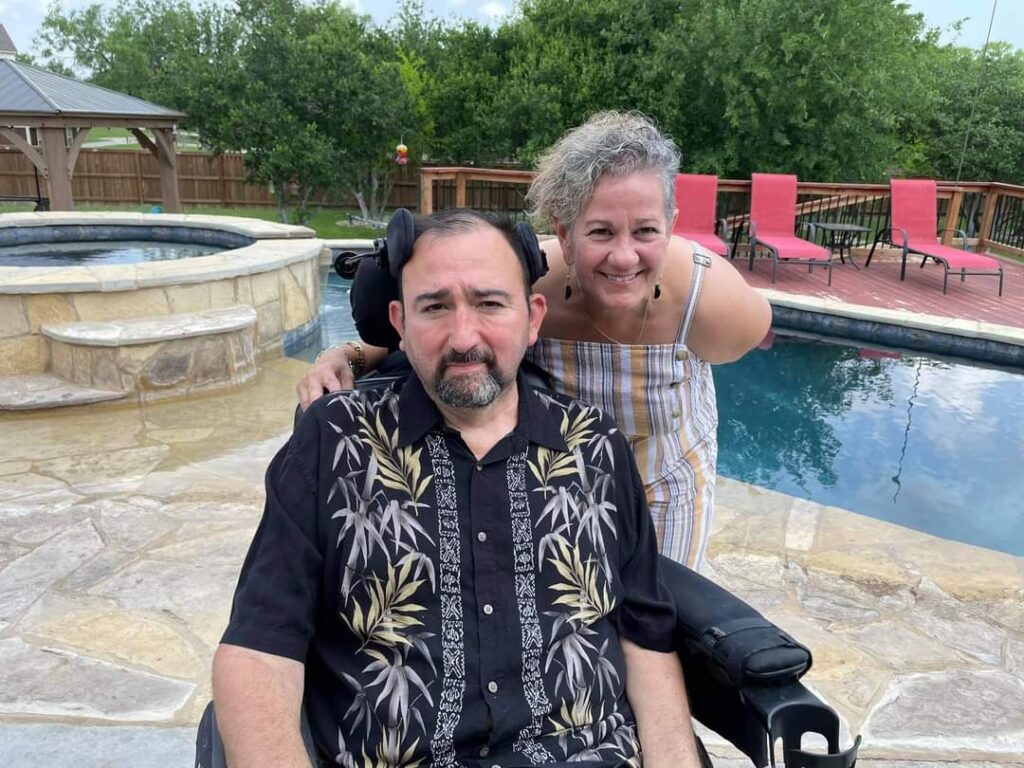
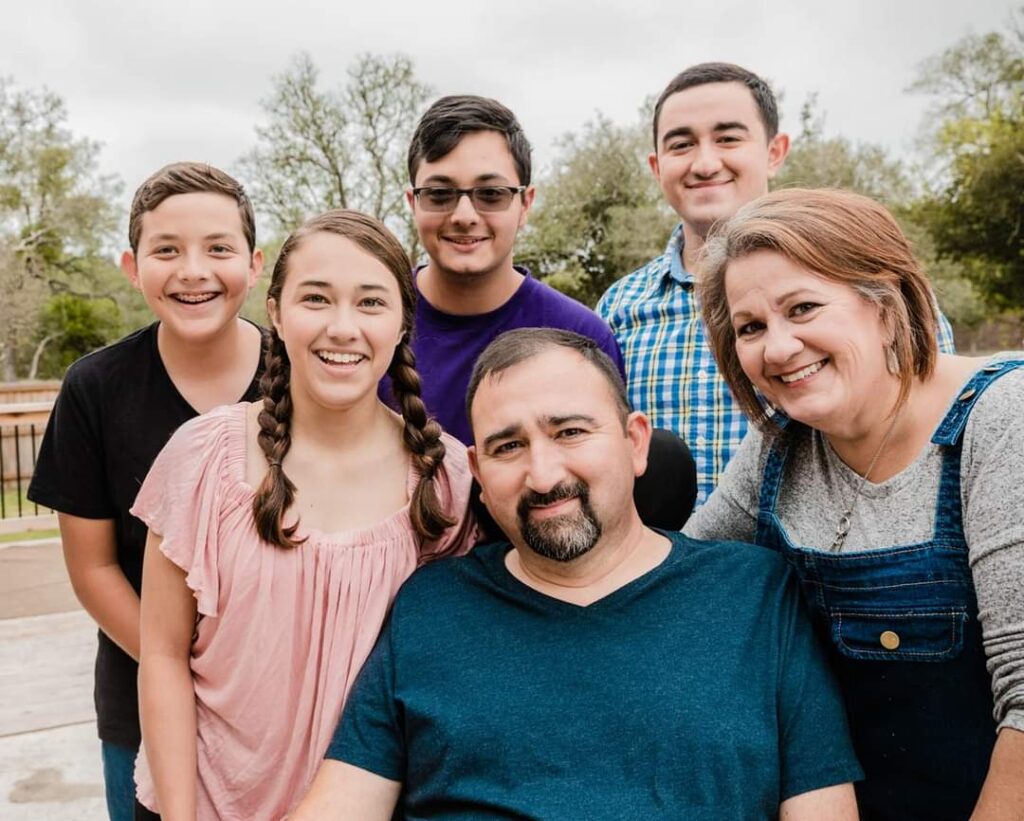
I served 21 years in the Air Force as a medic. As an EMT and a medic, I pursued advanced training as a provider extender. The last 12 years of service, I functioned as an Independent Duty Medical Technician (IDMT). They send an IDM team to undesirable locations in support of the military and civilian personnel deployed to those locations. I explain to civilian friends that it’s a cross between a P.A. and an advanced paramedic. So I joke with my friends that I’m not a real doctor, but I played one in the Air Force. After my service, I followed my wife who was also an Air Force employee. While being a stay at home dad, I took a position in Germany as a contracted disaster response manager working in support of the Air Force. I did that for 5 years until I ended up taking a position with the Salvation Army here in San Antonio as the executive director. By then, my wife and I had one child that was 14 years old and we actually adopted three additional children at that time, going from a family of three to one of six. Unfortunately, two years after adopting our kids, I was diagnosed with ALS. I am a man of faith. I believe in a great being, but I don’t blame God for ALS. I simply see it as aberrant biology: a combination of life in general and genetics. I’m not angry; I resent the fact that I’m unable to do many physical things that I used to, but I live what in my opinion is a blessed life. None of us are guaranteed the next day. Physically, I’m not able to do pretty much anything. I’m in a wheelchair but being involved in advocacy gives me peace of mind knowing that I’m hopefully contributing to the ultimate goal of finding a cure or viable treatment. It’s given me the courage to also do things that I would have been extremely hesitant to do before, such as public speaking. Crazy enough, I’m even doing stand up comedy to share about ALS and everything that comes along with it.

My family has really been the anchor to me being able to remain engaged and in good spirits. My sister being my caregiver is rather special, due to the fact that she is younger and we really didn’t grow up together. By the time she was in her teens, I was already out of the house. So it’s given us an opportunity to really get to know each other. My wife and kids acknowledge that I have ALS, and they care for me greatly and help me and support me in every possible way, but they don’t treat me differently at all. ALS is just another part of “Dad”, and what the family deals with. ALS is a big part of our day to day life, but we try not to make it the center of our universe. It’s just something we’re all having to deal with and of course, with my sense of humor, it provides for plenty of discussion and sharing about ALS with respect to the silly ways in which we get along. No subject is off the table when it comes to handling both ALS and life in general.

Honestly, very often in our society, individuals with physical limitations are perceived as being needy and unable to speak for themselves. And unfortunately, it creates a misperception of individuals with other than normal physical abilities. The truth is, with ALS specifically, unless you experience dementia along with ALS, our minds are completely unaffected other than the stress that comes along with dealing with a terminal condition. As we begin to lose our ability to speak, there are ways to communicate with us such as technology, communication boards, etc. So never assume that a person with limited physical abilities is not capable of being able to speak for themselves. It takes patience and understanding to understand that people living with ALS have so much more to contribute than our outward appearance may represent. We are still a part of our families, very much alive, and able to contribute to our support networks and able to make a difference even if we’re only able to use our eyes to communicate. There are individuals around the world that are living with ALS and doing amazing things with their support network and their minds: being innovative, being active ambassadors for others, etc. We have a terminal disease, but we’re not dead yet.”


Story and Photos: Allie Vasak

Follow Juan Reyes’s blog!  alstexasdad.com