
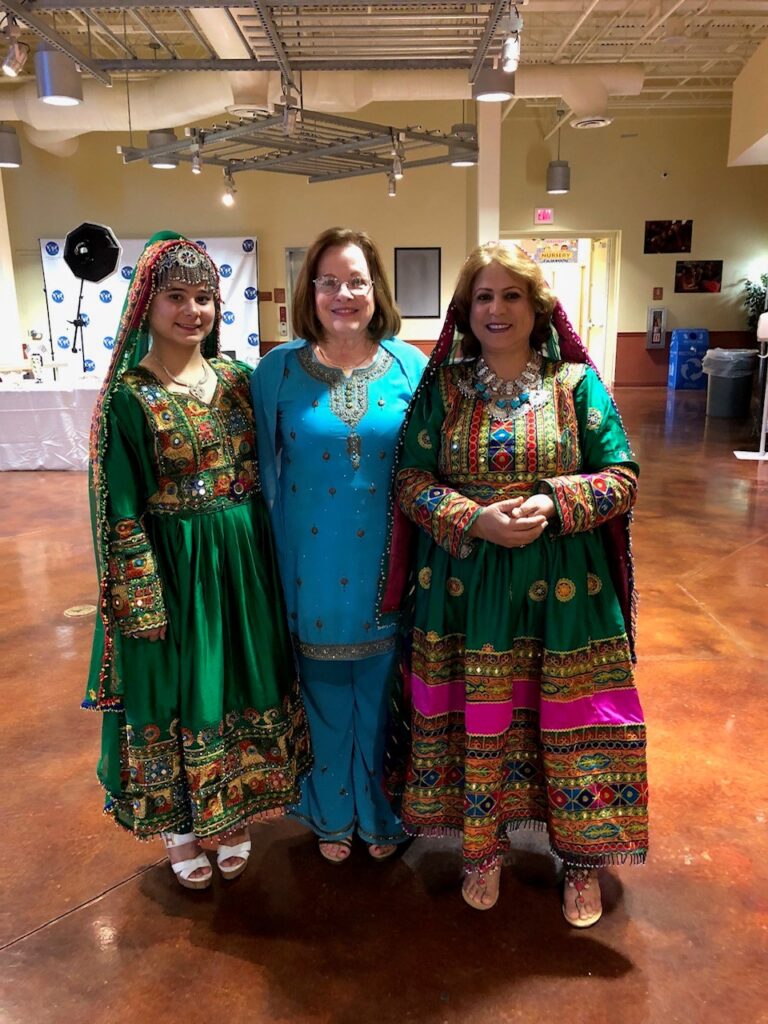
“Retirement doesn’t mean you have to retire from life,” says Margaret Constantino, reflecting on her motivations to found the Center for Refugee Services (CRS) in San Antonio. “Never stop learning. Never stop finding new ways to serve others.”
Margaret was born in Germany right after World War Two, where her father was stationed as a US military member. Shortly after, their family relocated to San Antonio when she was just five years old.
“San Antonio has the perfect climate and a big military community, and I feel like I’m as much a native Texan as anybody who was born here,” she says.
Even as a child, Margaret wanted to travel and explore the world, but she never really got the chance until she was much older. Nevertheless, her love of world affairs drove her to study history, political science, and French in college.
“I just love understanding how people interact in different cultures,” she recalls. “My original career goal was to join the Foreign Services and become a diplomat, and that would’ve been a dream come true, but life had different plans.”
“I met the love of my life, and we got married right out of college and settled in San Antonio.”
Margaret and her husband have three children, all of whom they adopted with special needs. “We couldn’t have children, so after about six years, we knew we wanted to be parents,” she explains. “So we thought, ‘well we love children, and we don’t care what color they are, or what condition they come in, we’ll love them unconditionally.’”
They adopted all of their children as newborns and got to see them grow and develop. “It would turn out to be the best thing we’ve ever done,” she emphasizes with a big smile.
Her children needed a lot of medical attention throughout their lives, especially her youngest son, who has cerebral palsy. Yet, despite spending a lot of time in hospitals, their lives have been significantly enriched by their children, who are now in their forties and doing well with families of their own.
Inspired by her own experience raising special needs children, Margaret became involved in The Arc of San Antonio, a large nonprofit that serves adults and children with developmental disabilities. She has been on their board of directors for 13 years and is currently the board president, which allows her to see firsthand the difference that nonprofits make in people’s lives, especially the vulnerable.
Around the same time Margaret joined The Arc, she was retiring from a twenty-year career as a counselor at UTSA. There she used her passion for problem-solving to help young adults find jobs that suited their skills, interests, and personalities.
“In 2006 or so, I was eligible for retirement. And so, I thought, ‘well, I can retire young, but what am I going to do, because I can’t slow down, I can’t stop.”
So she went back to school and applied for a Ph.D. program at UTSA and got in, thus beginning the ride of her life.
When she started her Ph.D. program, Margaret didn’t know much about mental health. Still, she became involved in setting up programs on the west side of San Antonio to help impoverished neighborhoods access mental health services. Through these connections, she met someone who was working with refugees.
“I remember thinking, ‘refugees? In San Antonio? I never heard of such a thing,’” she jokes.
Even in 2007, there were a lot of refugees in San Antonio, but they were not that well-publicized or visible. They came from all over the world, and most of these families were trying to start a new life in a new country after having escaped genocide and political insecurity.
After discovering the presence of refugees in San Antonio, Margaret got the opportunity to work in a grant-funded program through Communities in school, a drop-out prevention program for children. Through the grant, she worked with refugee parents to navigate the school system to ensure a prosperous future for their kids.
“To me, that was like a light bulb turning on, because here, I was working with people from other countries. I never got a chance to visit those countries, so somehow life decided to send them to me,” she says.
“My love of history and political dynamics helped me to dig deeper into why these conflicts were displacing so many people worldwide, and it was just devastating,” she sighs. “But I could see hope in the eyes of all these people.”
At the end of 2008, Margaret’s life-long friend and co-worker at the time, Dr. Rhia Baker, suggested that they start a nonprofit specifically to aid refugees, and so they founded the Center for Refugee Services. Thus, what began as a temporary experience as a Ph.D. intern turned into an 11-year adventure that is stronger than ever.
Margaret has found another passion working with adults and children from all over the world, and “my African friends helped me develop my French skills even more,” she says with a smile.
She serves as a cultural guide, helping newcomers understand American culture and access resources such as transportation, healthcare, and social services.
Margaret is an empathetic person, and people realize that she has a genuine interest in them. With her knowledge of community resources and services, she’s an essential resource for many refugees in San Antonio.
“The early days of our nonprofit were really tough because we did not know what we were doing,” she recalls. “We did not have any money. We needed an office, we needed equipment, and we needed to set up our program to serve as many refugees as would walk through our door.”
And slowly, they grew.
They built relationships with churches, mosques, other nonprofits, and even with the city government, and gradually word got out that the Center for Refugee Services was a small but formidable nonprofit that could be trusted to “welcome our newest neighbors.”
“So that’s the basis of the work we do; we are a welcoming place where anybody who walks through our door is automatically our neighbor. We do not ask them to pay for anything.”
“Every time we look at the news and see what’s happening in the world both as a result of political dysfunction and COVID, we see a lot of reasons to lose hope, but not one moment in my last 11 years have I ever felt hopeless,” says Margaret.
“Some of the best success stories are the children of refugees who grow up to become the next generation of professionals.”
“When I look at the American dream and think about what it means, I see it every day. I see how immigrants just want the same thing we all want — to have a better life in this country. I see how their children are like little sponges, soaking up as much education as they can to create a better future for themselves.”
Today, in their 11th year of existence, the Center for Refugee Services has distributed donations to hundreds of refugee families. In addition, it has provided over 150 scholarships to graduating high school students and re-entry college adults who want to learn a new skill. The center offers education services, including English classes and a music program for students. In collaboration with the San Antonio Refugee Health Clinic, a UT Health-sponsored student-run free clinic, the center also provides health and wellness services to any refugee, asylum seeker, or immigrant who walks in through their doors.
“Every single family is very personal to us, and their successes are our successes, and their challenges are real challenges. They don’t want to take anything away from anybody. They want to make their own way in the world, and because we give them a chance and encourage them, they’re going to give back ten times more than we ever gave.”
“When I see all of the stories about people suffering in Sudan or Somalia or Afghanistan, I feel like I know them.”
“The people who are suffering in other parts of the world, they still belong to us. I see the world as an extended family of people who are really struggling to make it work with so much against them.”
“We can’t always change that, but we can do what we do here at the Center for Refugee Services.”
To learn more about the amazing work that the Center for Refugee Services does, visit https://sarefugees.org/
Story: Abakar Baraka, Photographs: CRS, Margaret Constantino
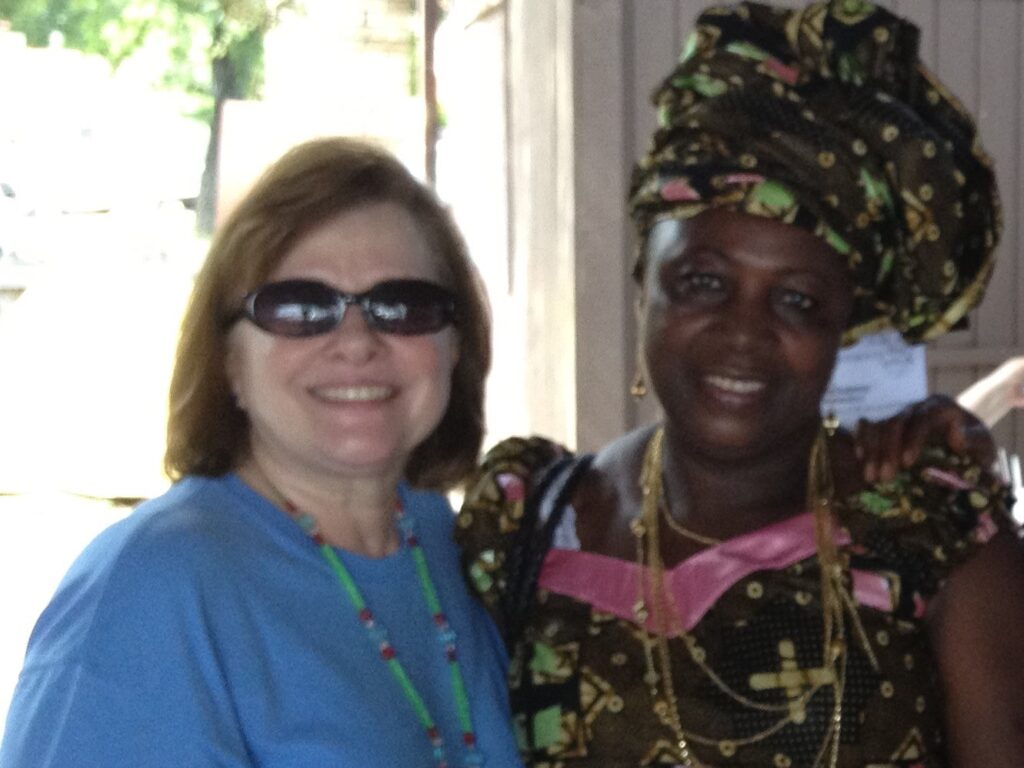
Margaret with one of her African friends 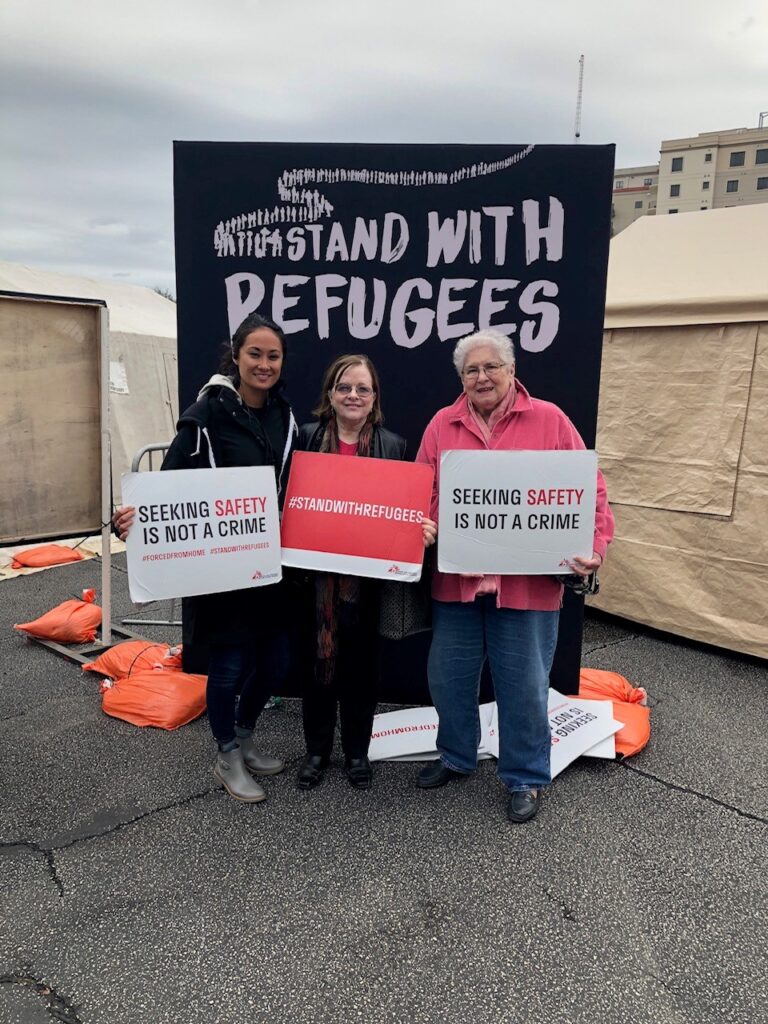
At a MSF exhibit in SA (Doctors Without Borders). It takes all of us to do our part 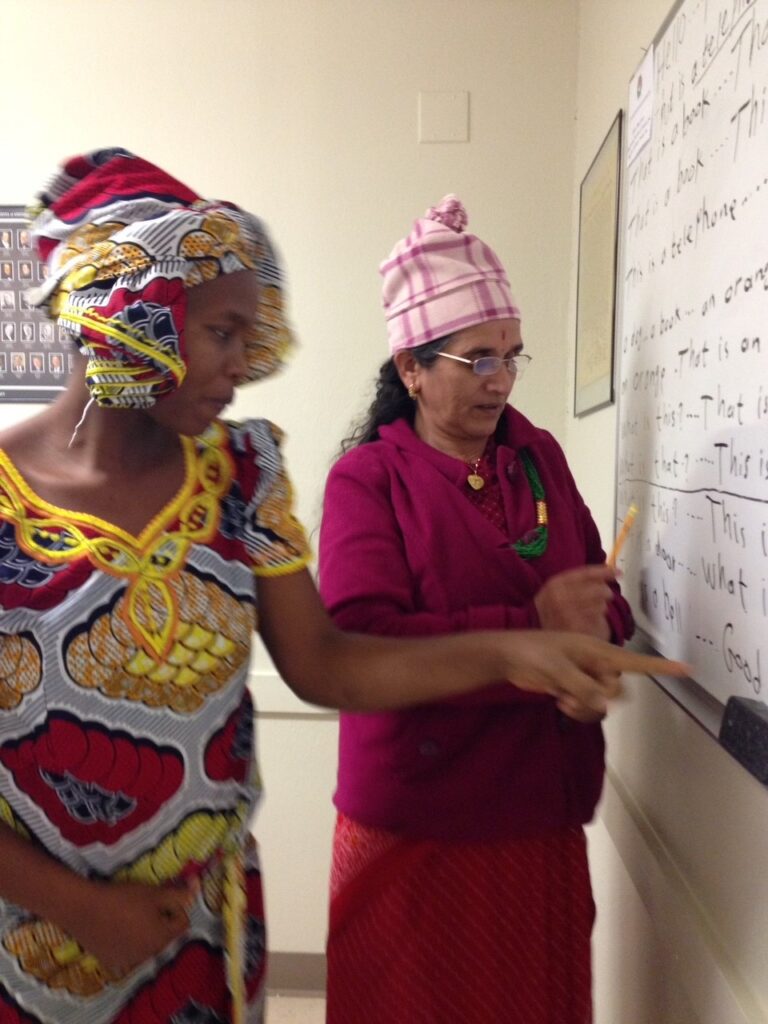
CRS clients learning English 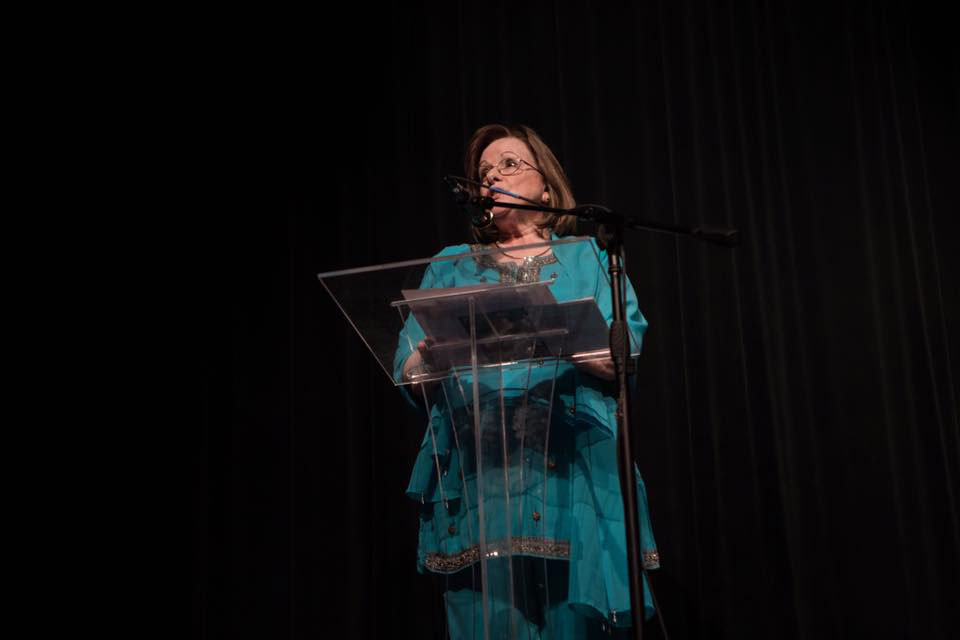
Margaret Constantino, Co-founder of CRS 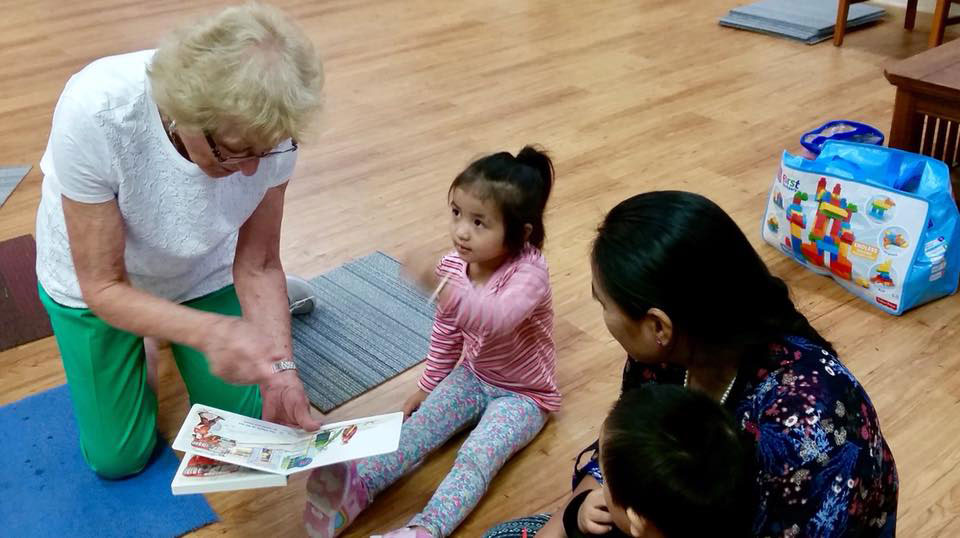
Practicing motor skills at Play & Learn 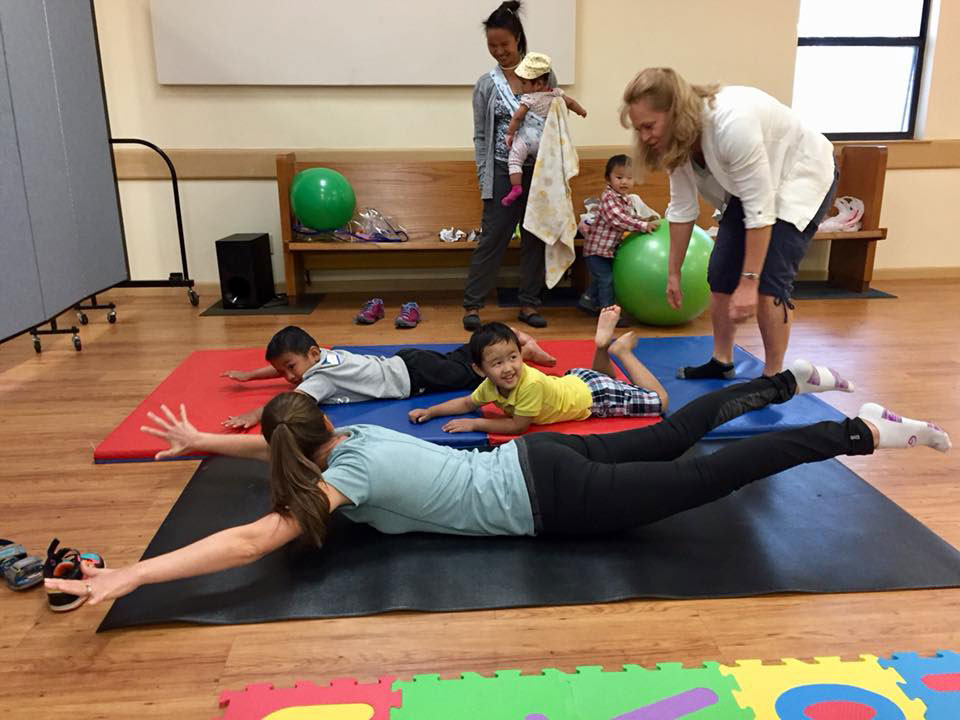
Story time at Play & Learn