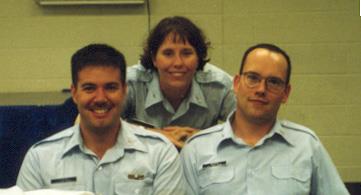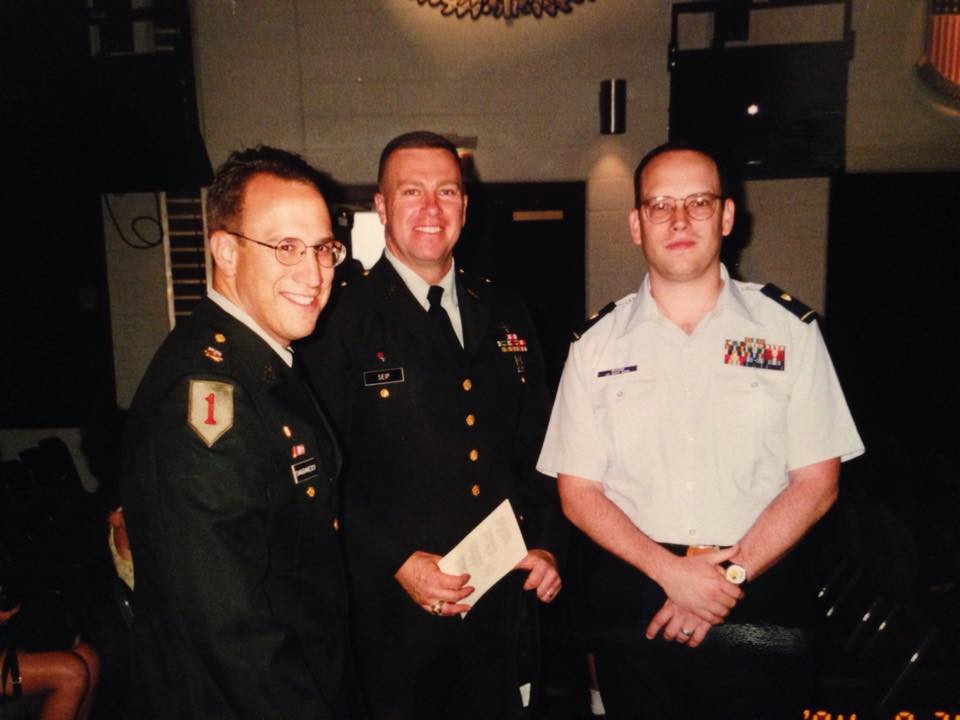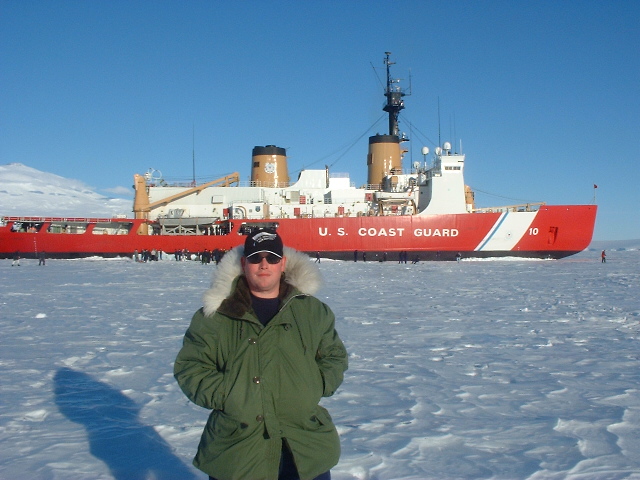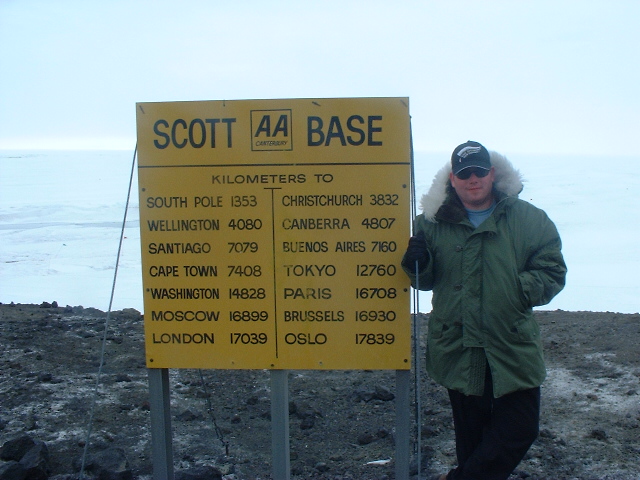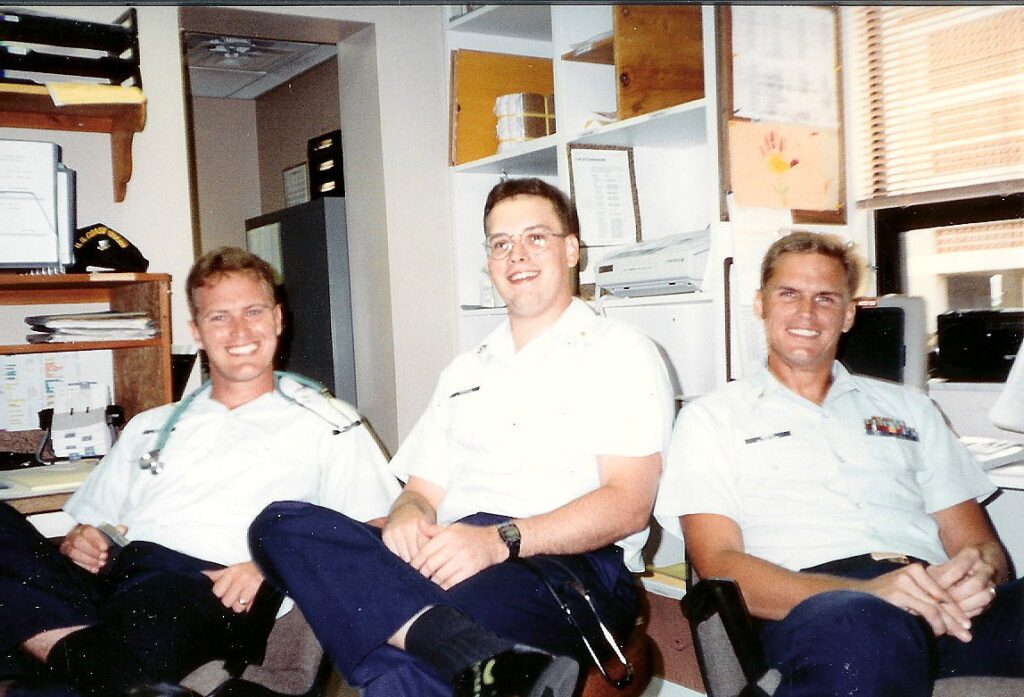
I’m a retired Coast Guardsman. I was in the Coast Guard for 21 years, and the way things worked, I ended up in the medical community. I was a corpsman, similar to a medic in the army. When I was in my training as a corpsman, there was a Physician Assistant (PA) who was there named Andy. I remember seeing him and thinking, “That guy looks like he is in charge. He looks so cool!” There was something about that individual that pushed me towards becoming a PA. Over the next few years, I researched the profession and learned more about it, because I didn’t know what a PA was at the time. Out of everything I did as a corpsman, I knew that I liked working with patients more than anything. If I wanted to maintain a connection with patient care, I knew that I had to do something different. I went to PA school in 1998 and graduated in 2000 with a Bachelor’s degree. I got my Master’s degree shortly after that and worked in family medicine and primary care. Becoming a PA was massively important in my life. I previously always wondered if I would amount to anything, as I felt that I had obtained my ceiling pretty early on. Getting accepted into PA school was huge because it was the first time that I felt like I had value. Somebody saw value in me. Somebody said, “this person is more than the sum of his parts.”
In 2004, I had the opportunity to teach for the first time. This was not like the typical “you’re going to be on board a ship and tell people to quit smoking,” but real formal teaching. I took a position in the Coast Guard as an instructor at the Interservice PA program here in San Antonio. It has been an ongoing progression since then. I retired from the Coast Guard in 2011, and then I went to work at The University of Washington for 4 years in PA education. Then, I came here in 2015 and started teaching at UTHSCSA. I think there are different kinds of people in this world. There are the kind that think long and hard about something, weigh the pros and cons, and from there they make a decision. I’m exactly the opposite. I was asked if teaching was something I would be interested in, and I said yes. However, I quickly knew that I was in the right place. I feel very lucky that I ended up in education.
Right now, I am currently involved in furthering my education, and I am focused on different teaching frameworks and strategies. Education is a social science, and, to me, there are all these beliefs rooted in what has come before. A lot of these things, however, are flawed. When I first got into teaching, it almost felt like I was chopping wood or I had a script that I had to follow. I taught in a very traditional way. We have a real commitment to the traditional teaching approach, but I don’t think that’s always the best way to deliver knowledge. We also have a real commitment to brick-and-mortar teaching. It has gotten to the point now where I really appreciate the philosophy of teaching, different teaching methods, how information can be delivered, and how knowledge is processed by students. My research currently focuses on different teaching methodologies away from what is traditional and the use of resources and tools that are different from what has been long-established. There are all kinds of examples out there of making learning fun, even for adult learners. We need to utilize those methods. For example, our PA classes are stressed and clearly nobody wants to “drink from a firehose.” How can we take that firehose and take that down to a garden hose, while still obtaining our goal of getting students graduated?
People are resistant to new methodologies for many reasons. It takes a lot of manpower to change the way classes are delivered, and both the instructors and students are reluctant to shift away from a traditional classroom. Right now, I’m investigating online vs. traditional delivery of the anatomy course to our PA students. Suppose I show that online course delivery is as good as the traditional delivery and cadaveric experience. In that case, you may see how that might “move the needle.” At the very least, I hope that my research starts a conversation. Do we need to subject the students to the rigors of a challenging course if we can benefit from scaling it back a bit? In the small microcosm of anatomy, it doesn’t need to be all that hard and people can still perform well. I think PA education is a moving train. I don’t think that I will see a big dramatic change immediately. However, I’m hoping that down the road, I can contribute to improving the students’ learning experience and decrease the effect of stress that comes from it. Truthfully, I don’t think we are very far from that.
I’m currently also doing research on admissions and making the PA admissions process one that is fair, equitable, and allows the widest, diversified applicant pool. A lot of programs set their admissions standards very high, but I do think that when you set these standards really high, and you put the GPA requirement very high, it doesn’t have the effect that people think it has. You go back to the data, you run those numbers and do the analysis, but GPA and PA school performance do not always track together. People that had a GPA of 3.26 in their undergraduate studies go on to get A’s in all their PA classes, while individuals with a GPA of 3.8 may do poorly. You put all that emphasis on these prerequisites and people think that this is the perfect way to evaluate potential PAs, but it is really not. I’m not saying that there is a perfect formula, but we really do need something that will aid us in picking the right applicant.
I feel very committed to education. I want to teach students to think and learn on their own! What makes it difficult with medical education is that there is a lot of foundational knowledge that you have to have. You can’t go into it blind, but there is a point at which the foundational knowledge stops and the student has to pick it up. There’s a moment during which I am with a student, and the student asks me a question, and it’s phrased in such a way that I know that this person gets it. I want us to move to that faster. Rather than the student sitting there memorizing all the drugs given to a patient with an upper respiratory tract infection, I want the student to instead be able to apply the information.
The most rewarding aspect of being an educator is seeing the success of the students. Every time a class graduates, I get emotional. It’s like I get to see success through their eyes. I think that I’m still a PA and I’ll always be a PA. There was a time when I was a PA who taught, and now I feel that I am much more of an educator who happens to be a PA.
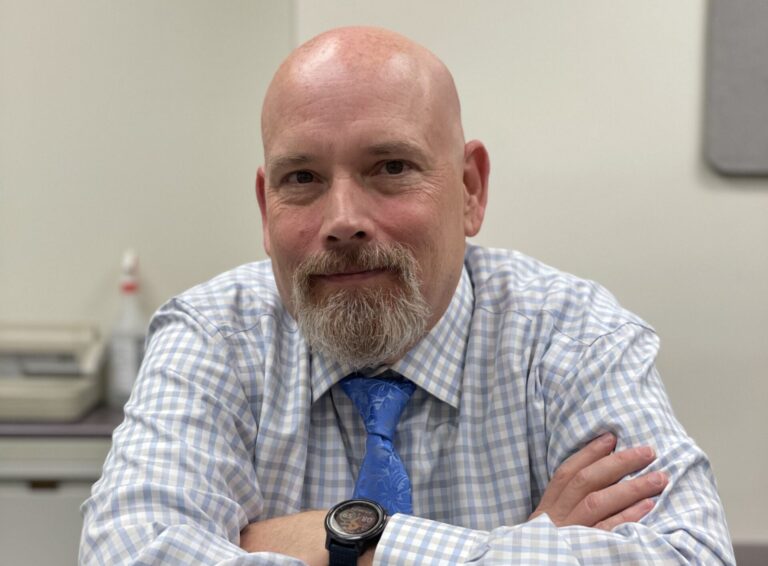
Steven Skaggs is 3 months away from finishing his PhD. He plans on defending his dissertation in Fall of 2021. In the time that he has left with his career, he aspires to leave a positive change in education.
Story: Janet Li, Photographs: Claire Schenken