
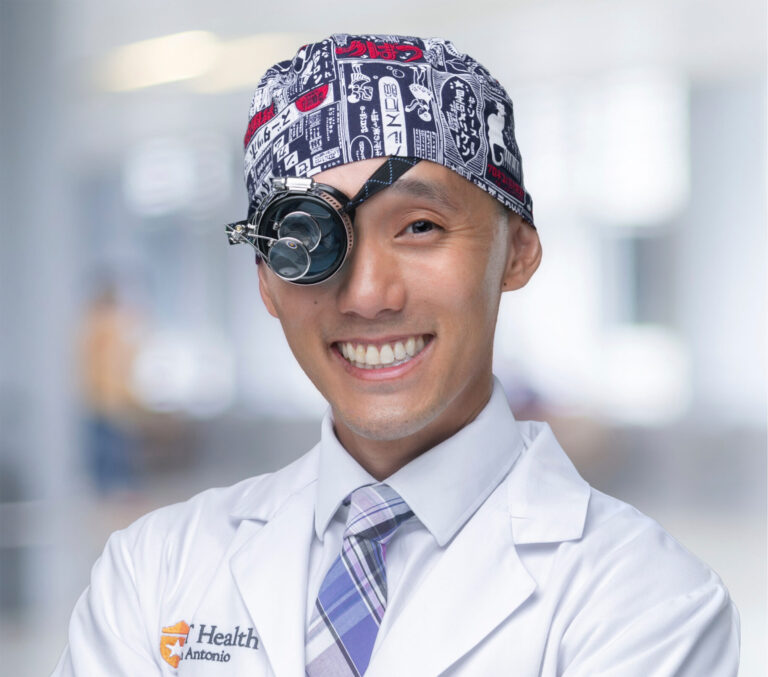
I was born and raised in Houston, Texas. Growing up, I fell in love with math and sciences in high school. I decided in college that I wanted to pursue a career in biochemistry with a focus in research. This led me to initially pursue a Ph.D. in Immunology at Harvard after undergrad. Interestingly, I realized in my second year of graduate school that I was spending more time talking to mice than I was talking to people. As someone who is outgoing and loves interacting with strangers and new people, it didn’t feel like this path was the one I was meant to take. It was right then and there that I knew I needed a career transition. I decided to divert to pharmacy because of the direct involvement in patient care. I ended up attending pharmacy school at UT Austin while my wife attended medical school at UTHSA. Four years later, she matched to residency in California, and I followed suit to be with her. In those years of living in California, I mainly worked retail pharmacy at CVS and then transitioned to working at a health insurance company for half a year. Near the tail end of my time there, I got to pursue a clinical pharmacy residency where I worked as a pharmacist in the hospital. This experience exposed me to what it was like rounding with the internal medicine residents. I genuinely enjoyed what they were doing because, cognitively, being in medicine is different than being a pharmacist. In medicine, you are working with the patient to solve a puzzle. As a pharmacist, I already had that puzzle solved for me. That’s the realization that helped me take the next step to being even more involved with direct patient care while also having more autonomy to do so. Once again in my life, I found myself wanting another career transition.
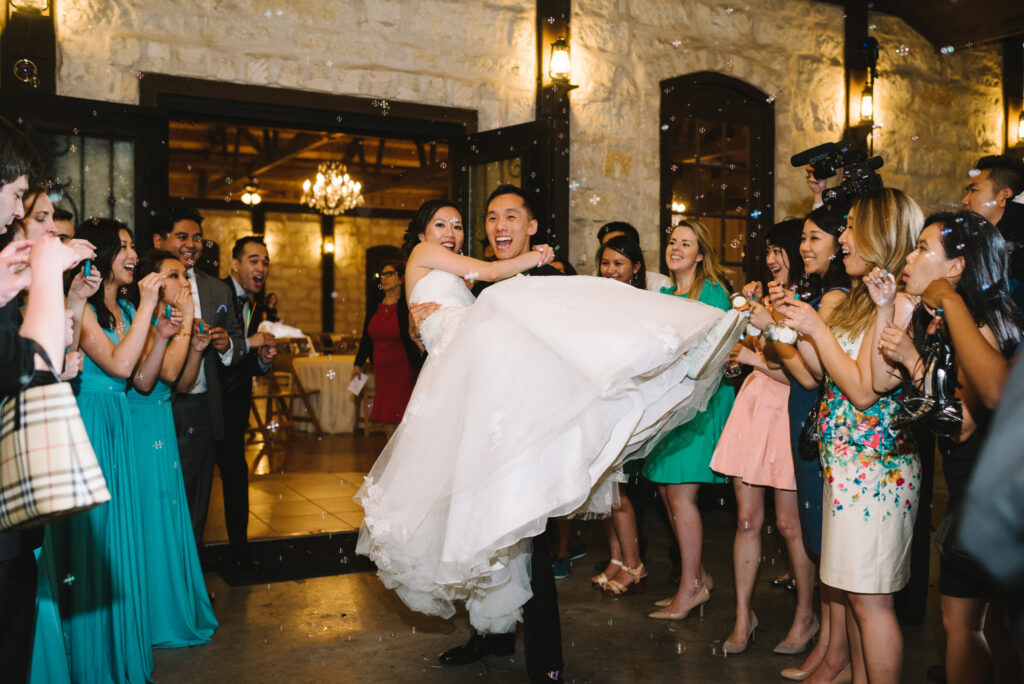
Making the jump to medicine from pharmacy was extremely tough. It was difficult having to teach myself all the material for the MCAT because I was already 10 years out of undergrad. I feel like once you’ve been out of school for some time, the way your brain works and the amount of mental energy you have to exert for academics are different. Luckily, UTHSA took a chance on me, and I was given the opportunity to become a medical student. When I was with my wife while she was going through medical school, I saw how much she studied in the library all the time. I remember her staying out late to study and all of the effort and hard work she put in for her education. However, I didn’t really gain a true appreciation for what she had to endure until I became a medical student myself, and this whole journey brought my wife and I closer together.
"If I could talk to my past-self from the first year of medical school, I would definitely tell him now I have less hair on my head, but the journey was well worth it."
-Tony Vu
Despite taking many years to find the path that was right for me, I found that this journey allowed me to look at problems from a unique perspective. For example, regardless of what rotation I was on, I was able to be useful by utilizing my prior pharmacy training. Whether it was antibiotic selection, choosing cost-effective therapies, or renal dosing, I was able to contribute to the team. One patient interaction that I remember in particular was from an outpatient clerkship rotation. This patient was stable and satisfied with being on a medication called Victoza, a GLP-1 agonist that’s used in the management of type two diabetes. For her, it was an effective drug that she only had to use once a day, and it controlled her hemoglobin A1C to below 7%. Unfortunately, as a Medicare Part D member, her drug formulary changed the subsequent January, and her prescription insurance provider moved the medication to a higher-cost tier. She visibly expressed her frustration to me because the price of her Victoza quadrupled from this formulary change. Luckily, since I had experience working with a health insurance company, I knew a specific action she could take with the provider’s help called a tier exception request. Most people don’t even know about it, and it’s not talked about often enough. I told the resident I was working with that I would be glad to help her file this request, and the patient was open to giving it a try. The appeal eventually was approved, so the patient was able to stay on her medication for the price she had always been paying.

Looking back at the last four years of medical school, I realize that I have grown a lot as an individual. If I could talk to my past-self from the first year of medical school, I would definitely tell him now I have less hair on my head, but the journey was well worth it. I think as a first-year medical student, it’s a shell shock for everybody. It doesn’t matter which school you trained at previously, or whether your life experiences have prepared you; medical school is difficult for everybody. Everyone eventually gets through the journey at their own pace. If I had a piece of advice to tell, it would be that as long as you always put your best effort forward, everything will be perfectly okay and it will work out in the end.”
Story: Marie Vu; Photographs: Tony Vu, www.agapehousestudio.com