
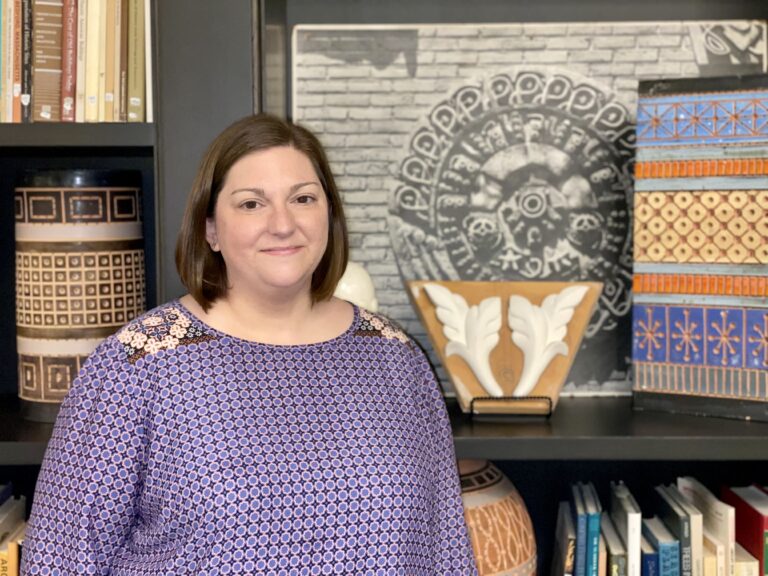
They always say find a job that you love and you’ll never be bored, and I’m never bored. I am an architect here in San Antonio at Ford Powell & Carson Architects. I’ve always been a really creative person and when I was in High School in Dallas, I asked myself, “What’s a profession that I can do that’s also really creative?” I’ve also always been really into historic buildings and the history of buildings, but then also the materials and things like that, so I kind of found my niche right away. I went to both undergraduate and graduate school at Texas Tech in Lubbock and got my Bachelor and Masters degrees in architecture. I knew I wanted to specialize in preservation, so my mentor at Tech said, “You should really look at Columbia or Penn because they have the top two preservation schools.” I never thought I’d get in; I’m from small town Texas and I thought, “No way”. But I got in, moved to New York City, and went to Columbia for grad school for two years to study historic preservation.
At Columbia, we took several studios and focused on the history and development of 14th Street, which is the longest street in Manhattan from river to river. We had to research and document and perform assessments of everything, which is the whole process of what I do in my job today. We do assessments, then develop treatment and restoration plans to bring the buildings back. My thesis was on a Coney Island building which was a cafeteria built in 1923 that was vacant, and my idea was to develop it into a new type of amusement for Coney Island patrons. I wanted to turn it into a big giant state park, since Coney Island didn’t have one yet. So I basically incorporated a Big Air style skate ramp into the lot next to the historic building. It was challenging because you had to think, “How do you integrate historic architecture with contemporary architecture and make two things work that should not go together?”.

While I was getting my masters in New York, we were required to do an internship. I basically applied everywhere that I had a place to stay, and at the time, my Aunt and Uncle lived in New Braunfels. So I applied to this firm and was accepted as the summer intern. During my internship, I got to work on both Mission Concepción and Mission San Jose. They were having a lot of problems with their plaster. Basically, the foundation sucks up water and then it comes into the building and tries to escape, which damages the plaster. I had to go and document all the iterations of plaster that occurred in the building since the Mission period, which is nearly impossible to do. My mentor here is one of those people who doesn’t give you a lot of instructions, so it was a lot of figuring out different techniques for documenting. We also took moisture readings to see how far the water had climbed up the wall and basically created these big mappings where the moisture was and where the different types of plaster were and dated them to certain periods if I could.
When I graduated, they made me an offer I couldn’t refuse, so I made the decision to leave New York and I have been here for the last 15 years. Since I was hired full-time, I’ve gotten to work on crazy, amazing projects. I’ve worked on the Alamo, the Capitol Dome in Austin, and the Missions; who can say they’ve done those kinds of projects.
Architecture is a generalist profession but people do have specialties like residential, churches, and medical. Preservation deals with existing buildings so we see how buildings age everyday. It’s not uncommon for me to go into a building and see damage, but it’s up to us and structural engineers to determine if it’s cosmetic cracking or if it’s structural cracking that has to be remediated immediately. They tell you when you get your license and stamp, you should lock it in a drawer and never use it because of the liability; it can be scary. It’s a lot like healthcare in that it deals with health, safety, and welfare. If I don’t design my buildings correctly and they fall down and hurt someone, that is a big deal so it’s heavily regulated.
It was challenging because you had to think, “How do you integrate historic architecture with contemporary architecture and make two things work that should not go together?”.
Allison Chambers Tweet
The basic rule of thumb is that if a building is older than 50 years, then it’s at least eligible to become historic, but it usually has to be associated with an event or a person that was historic or have a specific style of architecture that is historic. San Antonio has an Office of Historic Preservation, which oversees multiple historic districts and countless landmarks with the strictest level of review oversight. So we work really close with the city to make sure that all of our work is in compliance. The overarching guide that preservationists in the US use is the Secretary of Interior’s Standards for the Treatment of Historic Properties. It gives you the rule of thumb for different treatments of different materials and the principles preservationists should follow.
A restoration usually starts with the envelope of the building: you want to assess your walls, roof, windows, and doors. Once you assess the outer shell, then you can move to the interior and start restoring finishes, floors, walls, and ceilings. The big challenge in historic preservation is that we need all the modern conveniences, like air conditioning, data, and audio-visual, but you don’t want to detract from the historic character. So the fun part for me is trying to blend those two. We always try to pick really creative engineers that are willing to think outside the box rather than just run exposed conduit.
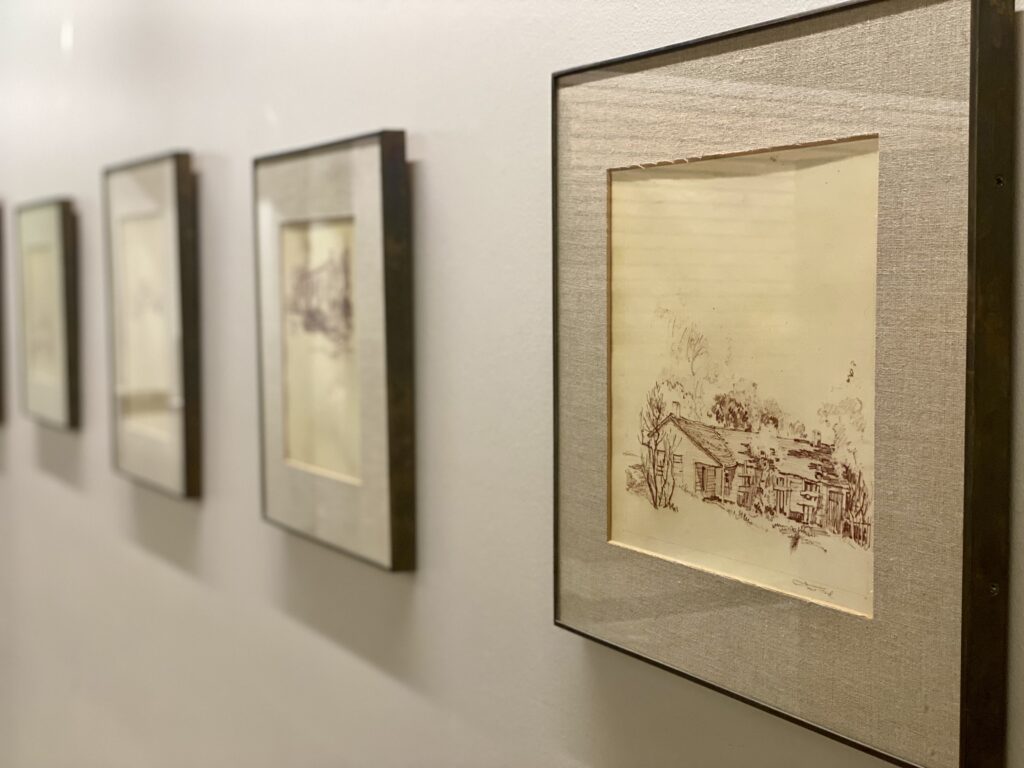
Our firm is over 80 years old so it’s hard to throw a stone and not hit a building that we’ve worked on here in San Antonio. It was founded by O’Neil Ford who was an early Texas modernist architect, and he got a reputation for designing mid-century modern buildings, houses, and commercial buildings using local materials. He had an almost cult-like following in the sixties, where people would come to San Antonio to live and work for him in a compound he owned on the South Side called Willow Way, which had all these little casitas his architect followers lived in. So he created this community of architects that were like his disciples and perpetuated his architecture around the city and state. A lot of times you can drive around and try and guess if it’s an O’Neil Ford building or one of his disciples. Known for that kind of iconic style, our firm still uses a lot of detailing from that period and works with artisans to do doors and light fixtures that give the buildings the same San Antonio flavor that has held over from that period.
It’s so hard to say what project is my favorite because they are like my children; you work on them for about three years and by the time you’re done, you’re so sick of it. But I would have to say my favorite is the restoration of Mission Concepción. We did a full interior restoration of the plaster and when we were taking samples to have the plaster tested to assess the material breakdown, we just happened upon some original frescoes underneath. So then we had to undertake this whole campaign to try and uncover as much of it as we could to document it. It was in such poor condition so we knew we couldn’t expose it, but we were able to replicate the decorative painting that we found. We left a couple places open to that original surface, in what we call “windows”, so that people can understand what we found.
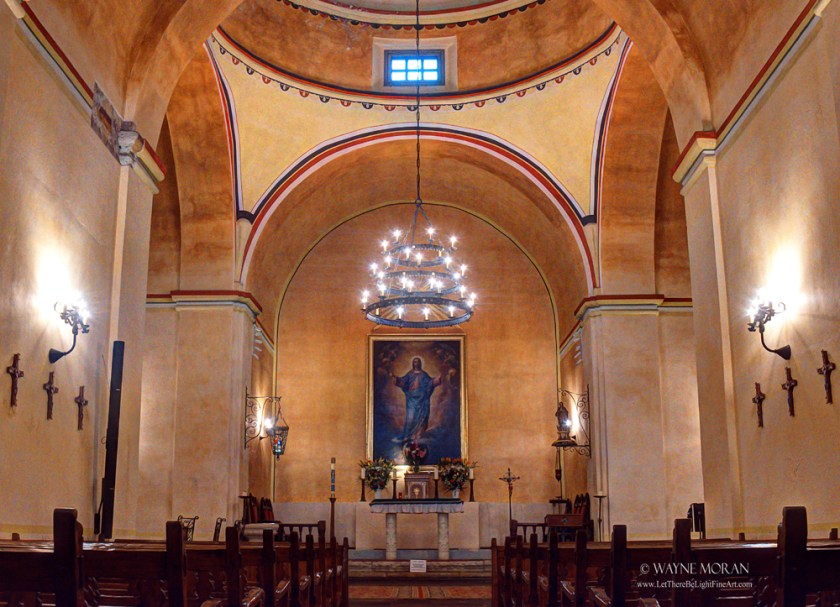
The frescoes were covered in the 1800’s, so they hadn’t been seen in over a century, and here I am on a scaffolding freaking out that we had just found all this historic painting. When the churches were secularized in 1860, Mission Concepción was turned into a boys school and some of the masons who did the replastering carved their names and the dates. The missionaries were doing inventories where they would describe the church and the paintings inside, so we have some information that helped us look in different areas of the building, so we got lucky with the dating. There was a nun that had translated those inventories in Mexico, which is how we know a lot of the history of the missions. A lot of missions during the secularization period were abandoned and people would take stone from them to build their own houses in the surrounding area, so many collapsed besides Mission Concepción. One of the Priests for the Archdiocese likes to joke that Mission Concepción is the only one that didn’t collapse, because it’s the only one named after a female.
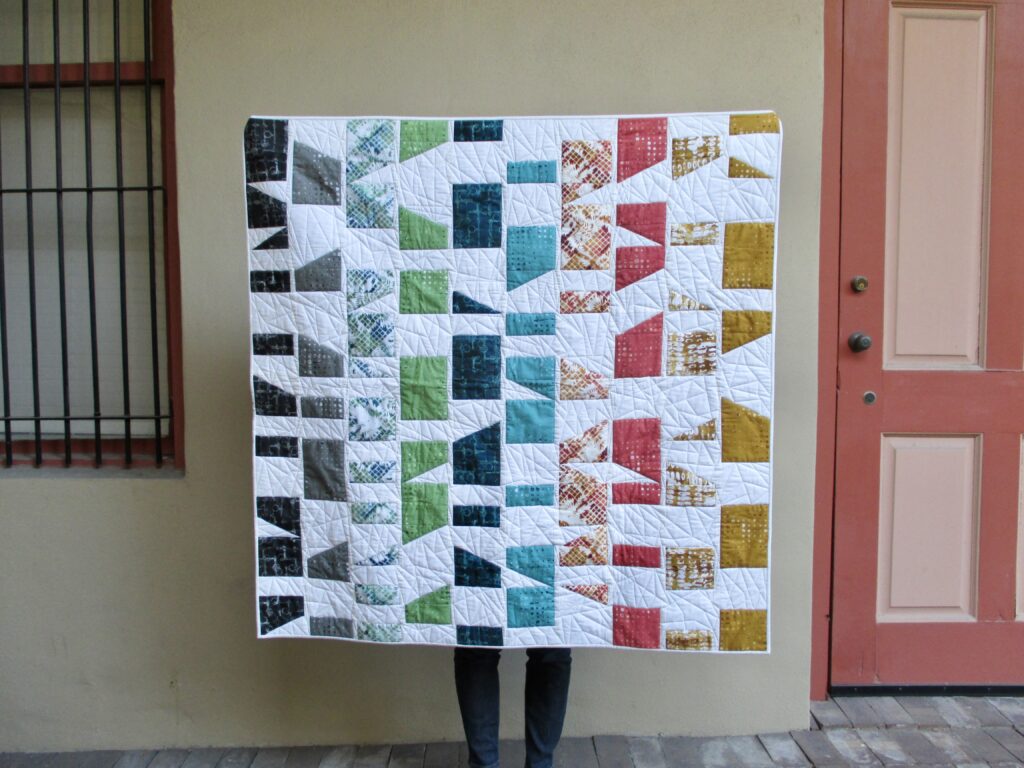
My side hustle, or rather my sanity, is that I’m a modern quilter and member of the San Antonio Modern Quilt Guild. So we’re not like your traditional Grandmother’s quilting. It’s more artistic, abstract, and modern. My grandmother and mom were both quilters growing up, and when I got out of school I was like, “Ok, I need a hobby”. My neighbor who lived across the hall from me at Blue Star was a quilter, so she got me into it, but I thought, “There’s got to be more people like me who are interested in more interesting quilts”. So I started Googling and found this whole quilting community, and just by luck the San Antonio Modern Quilt Guild was about to start. I found my people and have been here ever since! San Antonio is my home and I’m here for the long-term.
Story: Allison Vasak, Photographs: Allison Vasak, Wayne Moran