
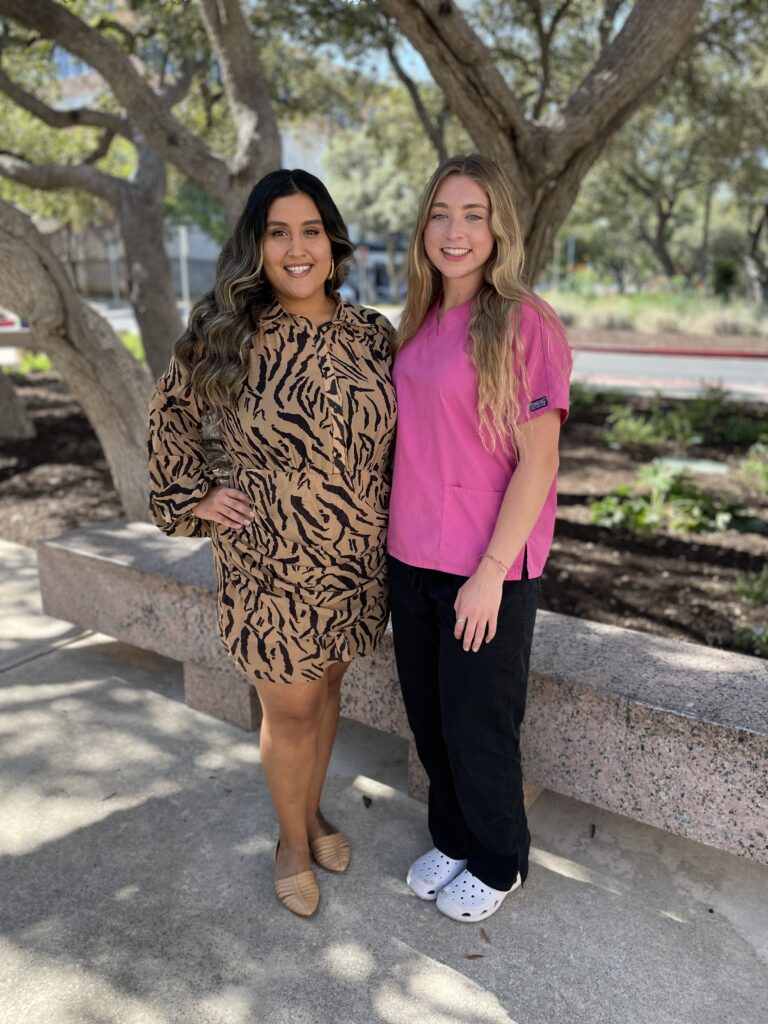
I mainly grew up in California and moved around to different places, but where I say that I grew up was in Oakland, which is generally a pretty diverse community and city in terms of race, ethnicity, and economic status. I spent the past five years in Pennsylvania doing my doctoral program before moving to San Antonio. I moved to San Antonio the summer I started my postdoctoral fellowship at UTSA, where I began my position in fall of 2021. I’ve been here ever since and am really enjoying it. I had actually never visited San Antonio before accepting this position. For me, San Antonio feels more like Oakland in the sense that I’m able to identify myself with the people in the community, especially with there being such a large Mexican-American and Latino population. I feel a greater sense of belonging here, and where I was on the east coast that wasn’t as prominent for me. However I did move here kind of during the pandemic, and that did impact my transition in the sense of building community, especially during the beginning of my time here where I experienced some isolation. During the first few months, many spaces were barely transitioning out of virtual to hybrid and eventually to more in-person events, so it was a period of ongoing adapting. But thankfully overtime I was able to connect with people even through that; I met some of my neighbors and now they’re really good friends of mine. I was also able to meet colleagues through faculty and campus events.
I think the pandemic brought social inequities and racial injustice to the public eye instead of it just being kept in certain spaces. For example, we saw that non healthcare essential workers, many of whom were people of color, didn’t have resources to work from home or even to take time off. So that constant exposure likely lead to more covid cases and in many cases death. For Latinos specifically, there was some recent research that came out from a scholar here at UTSA, where he showed that Latinos aged 65 and older died at twice the rate of their white counterparts. Given my interest in studying Latino health disparities, I have two goals with regards to how I want to use my research. First, I aim to study the nuances of the different Latino ethnic groups; how diverse and large these different subpopulations are in the U.S. I want to bring awareness to the fact that the Latino population is made up of people from different parts of Latin America, such as Mexico, Puerto Rico, Cuba, and Central and South America. I am particularly interested in examining the intersection of neighborhoods, race/ethnicity, stress and health. Second, I want to use my research as an opportunity to build relationships with undergraduate and graduate students. I was an undergraduate researcher, and I felt like that was really helpful in navigating different academic positions. I mean it was also quite a lot of effort and dedication, so I want to use my experiences to mentor other students along their educational journeys.
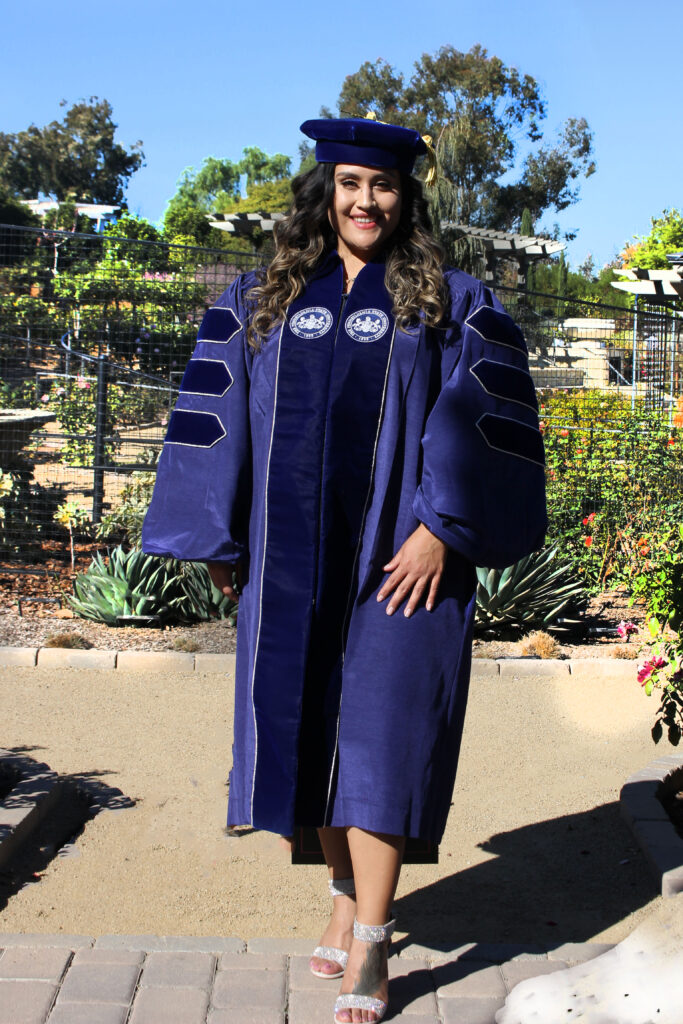
As the only one in my family to get a PhD, I carry much pride from my Mexican ancestors and loved ones who were not able to see me in this position. My grandmother, for example, passed away just one month before I started this fellowship. She was a resilient Mexican woman who taught herself how to speak English in one year to be able to advocate for herself and for her family in places she wasn’t welcomed. Through her and my mother, I also learned what it means to have compassion and stand by meaningful social causes. They boycotted alongside Cesar Chavez for better wages and better standards of living, so it is important for me to try to honor those values as an early career Latina researcher.
So just a little bit of my background—I’m considered a nontraditional student because I didn’t go directly to college from high school. I took some time off after high school, then I went to a community college, then I transferred to a four-year college and while there I took some time off as well. Given all of that, to be in the position that I am now seemed impossible, given that trajectory. I didn’t really know obtaining a PhD was an option for me during that time, but I do attribute where I am today to my undergraduate experience and the opportunities that I was presented with, as I myself went to a Hispanic serving institution where I felt more represented and had a sense of belonging. I felt represented by professors and also my peers, not just through racial and ethnic diversity but as working students. I really cherish those experiences, especially my female professors— one of them was a Latina professor who eventually became my research mentor. When I was pursuing the PhD, I had two goals; to get the PhD obviously, and to teach at a school like UTSA where the student body is largely Latino. UTSA was specifically looking for diverse, underrepresented PhDs who could come and teach students in the classroom and bring some representation, and this alignment with my personal goals led me to San Antonio. Furthermore, I’ve really felt comfortable working with the public health department here overall. I’m in my second year and I’ve been able to connect more with colleagues who are very friendly, welcoming, and supportive so I’m very grateful for this position. Diversity and belonging are very important to me and have influenced my career choices with regards to the focus of my research and what I want to teach in the classroom. I try to carry these themes into the classroom to create a safe space for my students to have discussions that otherwise maybe they might not have within their friend groups or things like that. But just in general, I care deeply about public health and I try to look at it through a health equity lens, which requires me to look beyond only addressing the individual. Public health often needs to be addressed at a more structural level to understand why unequal opportunities for better health exist to begin with. So I do try to bring topics into the classroom such as structural racism, women’s health, and health disparities just to name a few. Through facilitated conversations amongst myself and the students, I try to create that safe environment where we can talk about these important things that they can hopefully then take into the real world. One of the biggest pieces of advice I give to my Latino students is “Apply, apply, apply!”I know that sounds very generic but just apply for opportunities, even if you have the slightest doubt. This speaks to my own personal experience with having doubt and not wanting to apply for things. Unfortunately there are opportunities that are intended to increase diversity, especially in certain spaces where it doesn’t exist, where there isn’t increased accessibility. What I mean by that is programs will say “Ok we want to increase diversity, but we’re also safeguarding or gatekeeping”. These opportunities are not as public or well known to certain populations, so looking for them might take some work. So when you do find them, make sure you apply, whether it be an academic, financial or other kind of opportunity. I’ve only been in San Antonio for a little over a year, and so I myself am looking for more opportunities to become involved, not just academically but personally. The way that I see my contribution to UTSA and the Latino population within the San Antonio community right now would be my role as an educator, and looking for students who need some navigational help and being able to mentor them as a way to pay it forward to my own mentor. This role really brings my own upbringing and experiences full circle because I see myself in my Latino students, and I want to give them the guidance and support that they need in order to reach their own career goals.