
Interviewer (WY): What initially made you interested in joining SAPP? Why did you want to be involved?
Janet Li (JL): I first found the San Antonio People Project through their profile on Instagram. Overall, I thought the concept was really cool, and I liked how it was similar to the “Humans of New York” project. I thought it seemed like a great opportunity to meet people in my community that I didn’t know and find out how their experiences have impacted them. Since I already knew that I loved writing, and I was eager to meet more people outside of my immediate PA class social circle, I decided to apply to join the project. It ended up being a great way to meet students from other schools at UT Health San Antonio, other medical professionals, professors, and people outside of medicine entirely, while also honing my skills as a writer and interviewer. Since everyone involved with the project had a unique background and a passion for participating in the project, it was also a great way to experience interprofessional education in a less structured and more natural setting!
WY: Did you have a favorite story or interview? What made that story or interview meaningful?
JL: Though all my stories were meaningful, one of my favorite interviews was with Sarah Berger, PA-C. She was so honest about her journey to becoming a PA and the lessons that she learned along the way, including the value of surrounding yourself with strong mentors and always fostering a willingness to ask questions. Her work to open a clinic in Las Vegas to serve the underserved was inspiring, and our shared faith was a further commonality that we shared.
You never know what connections you can make until you leave your comfort zone and start to go out and meet people. Even after the interview was over, Sarah Berger became a dear mentor to me, passing on career advice, showing me how to navigate my challenging educational program, and giving me pointers on how to improve my ability to interact with patients. Since I interviewed her right before I started my first clinical rotation (in general surgery, no less), I really appreciated her advice. It has been such a blessing to have such an encouraging person in my support network, and I wouldn’t have made that connection without that SAPP story. She continues to be an encouraging presence in my life.
A second story that I particularly enjoyed working on was with Dr. Anais Rosa. It was very encouraging to me to know that someone can find such hope, no matter the physical and mental hardships encountered. I deeply admired her resilience in the face of those hard circumstances. My interview with her was virtual on Zoom, but I still felt such a tangible connection with her. I tried to learn from her experience: no matter what life puts in your way or what unexpected things may happen to you, you have to know how to get back up and keep taking steps forward. Physical, emotional, and spiritual resilency are all so important. I hope that the readers get to see how those circumstances taught Dr. Rosa to treasure the little moments of joy in life even more, and how those moments provide hope through the hardest, most unexpected times.
WY: How has your experience at SAPP impacted your education or training in your chosen profession? What lessons or practices will you carry with you?
JL: Aside from the lessons I learned from the people that I interviewed, the biggest lesson for me has actually been: never ever be afraid to ask questions. In healthcare, a large portion of your job is just listening to patients and finding out what is going on with them. Though many of those questions are focused on the current state of their health, some are more personal. It is important to ask about other “life” factors like family dynamics, living situations, personal values, and how they spend their time. That will teach you a lot about how a patient presents and his or her reasoning behind a certain decision. SAPP helped me to practice asking questions that go beyond the surface level in order to understand people and their experiences better. For example, my interview with Dr. Steven Skaggs helped me to step away from my perspective as a student and see the perspective of a passionate professor and researcher. I got to see how Dr. Skaggs puts a lot of thought and effort into teaching, and how his research into professional school admissions and different educational methodologies are helping improve the experience of future PA students. I especially saw how his studies on the impacts of distance learning would be relevant for education during and after the COVID-19 pandemic. A lot of times we assume things about our teachers and why they do things, or even question their method of doing things, but interviewing Dr. Skaggs helped me to see the other side of being a teacher and gain insight into his passion for what he does. It made me gain a deeper admiration for the work of my educators.
WY: Do you have a favorite or particularly impactful memory from your educational program that you would like to share?
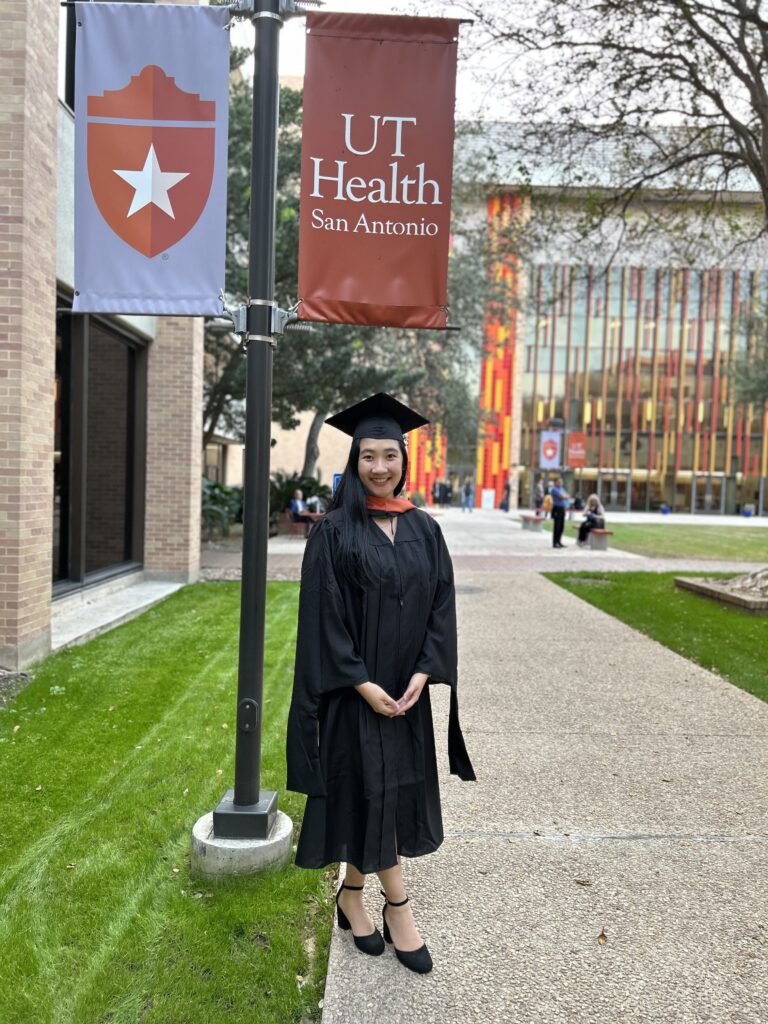
JL: It seems impossible to have just one favorite memory during my PA school experience. It is an understatement to say that so much happened! My class started PA school during the COVID pandemic in May of 2020, starting out with classes online. That was a very different experience for most of us, and it was especially tough trying to learn anatomy. Despite some trepidation, we were able to walk out with the knowledge we needed to do well in our clinical rotations and more forward with the program. Having graduated this past December, I don’t feel like I missed anything.
Social interactions with my classmates were certainly different in the virtual classroom. It’s strange being in a group of people who will be your classmates for the next two-and-a-half years and only seeing their pictures and names on a screen. In the middle of our second semester, we started having some educational activities in person, and it was fun to start being able to put faces to names and see how our classmates were in real life. We also got to finally meet our professors, the people who were adapting all this material to the virtual setting.
Later that winter, the Snow-pocalypse came right in the middle of our didactic year. Though my classmates and I had only known each other for a few months at that point (and after only a few events in person), everyone came together to share resources like water, power, and internet access so that we could keep attending our virtual classes. I was out of power myself, so I was able to go over to one of my classmates’ apartments for 5-6 days to have internet and warm water. Despite the effects of COVID, it was so heartwarming to see how we were still able to care for each other; no one was going through PA school alone.
As is the case for many students and all levels of education, the most memorable part was the friendships I formed with classmates and the experiences that we shared. We found common interests, walked through late night study sessions, and faced uniquely trying times together. We simply lived life together. I formed relationships that I know will last a long time, even though we are all going our separate ways after graduation and settling in different cities. We will still always be able to ask each other questions as now-colleagues and friends, offering advice and encouragement to each other along the way. I also have fond memories of certain preceptors whom I really enjoyed working with. The best ones treated me like a fellow colleague as much as a student; though they still corrected me when I made a mistake and taught me where I needed to learn more, that attitude of respect made me enjoy working with them and genuinely feel comfortable. A kind-hearted, sweet preceptor always made the rotation ten times more enjoyable, and provided me the most optimal learning experience. I am so thankful for those preceptors that I had.
WY: Everyone has a story, and yours is entering a new chapter. What do you think or hope your story will be like moving forward?
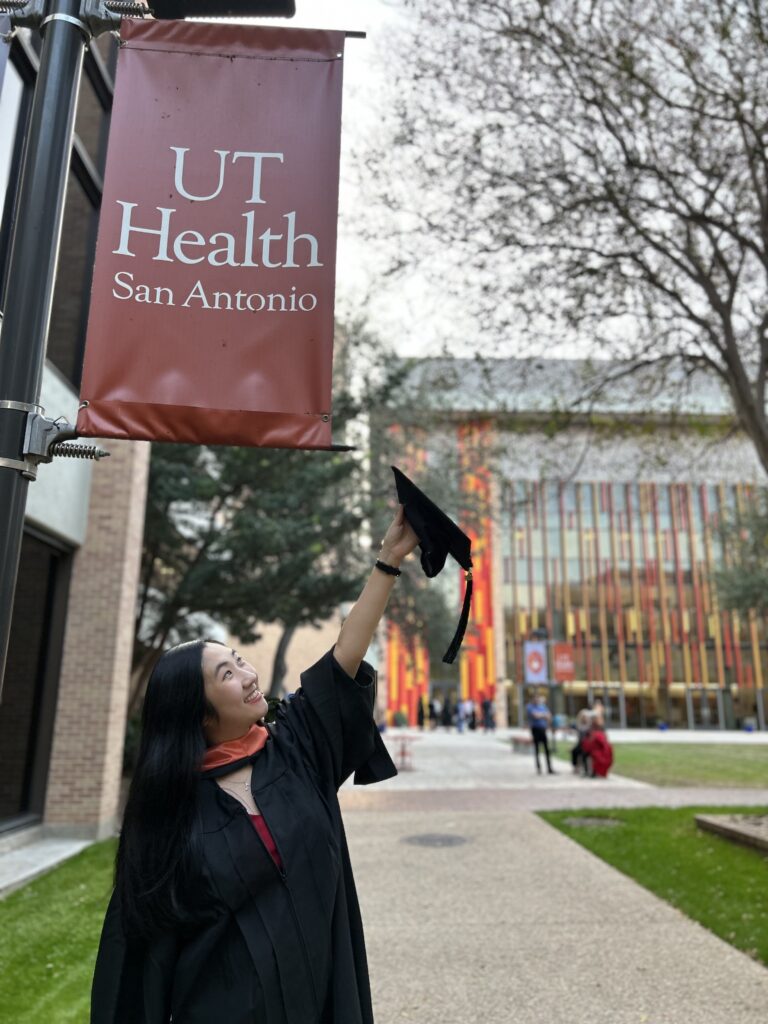
JL: I am definitely realizing that this is a new chapter for me. Time has flown by the last few months, and it still hasn’t completely hit home that I’ve officially graduated. I imagine that it will sink in eventually, when I realize that I don’t have to take end-of-rotation exams anymore, and I am looking forward to finding more work-life balance as a result. I don’t have a crystal ball, so it’s hard to say what exactly the future will hold, but I know that there will continue to be valuable lessons to learn along the way. As long as I continue to practice building resilience and don’t shy away from asking hard questions when needed, I am personally happy to take things one day at a time. Some days will certainly be harder than others, and personal challenges will always come up like they have in the past. Right now, I am still transitioning to practice, which is its own challenge. However, looking back from my experiences even in these last few months, the light will always outshine the dark. Things will get better, if not at least with time. With the most amazing support network, people who truly love me and encourage me, I’ve learned that I will come out the other side, slowly but surely. I am ready to continue moving forward.
I’ve recently started working at an outpatient pediatric clinic in Dallas. As a new provider, I want to be molded into a more compassionate and capable PA, providing the best care that I can for my kiddos (and their parents) who come to me. The clinic where I currently work at integrates aspects of conventional and functional medicine, and though the learning curve has been steep, the foundation I have for treating each patient as an individual with specific needs will continue to be a central focus for me. I am confident that I will continue to learn by seeing and doing, and I know that will naturally build my confidence over time.
As I get more and more comfortable with patient care, I also hope to give back to the PA profession by assisting with the education of future PAs. I benefited greatly from mentors like Sarah who helped me get to where I am today, and I hope to be a fellow mentor to help other students or Pre-PAs find the resources they need to be confident clinicians themselves.
Story: Will Young and Janet Li, Photos: Janet Li
Janet Li is currently a certified PA working in outpatient pediatrics in the DFW area. She was a part of SAPP from the summer of 2021 all the way to her graduation from UTHSCSA in December of 2022. She graduated with her Master of Physician Assistant Studies. When not taking care of cute kiddos in the clinic, she can be found enjoying quality time with sweet friends and family, studying in a local coffee shop, actively involved in church, writing/blogging, doing yoga, or watching Dallas Mavs basketball. If you have any further questions about her PA school, SAPP, or overall San Antonio experience, she can be reached at janet5li@yahoo.com

Interview by Will Young
Photographs courtesy of Janet Li, PA-C