
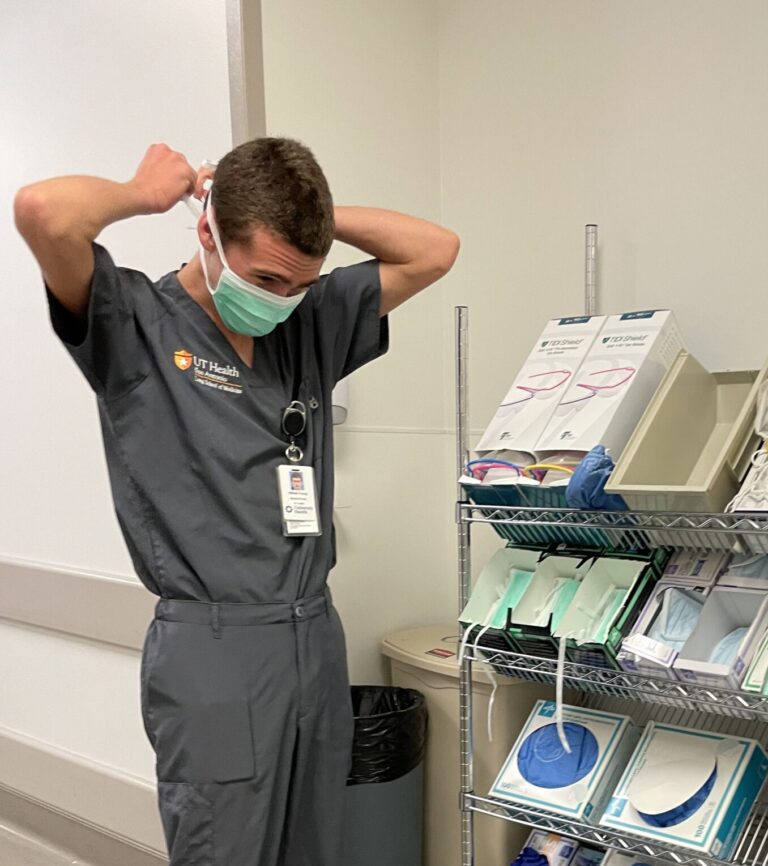
“Not too much longer now,” I told myself as I sat in the trauma bay in the pre-dawn hours of the morning, wishing the clock to tick a little faster so I could go home and sleep. I had been in the hospital since just before 5am the previous day, and thus I was too tired to study anything while waiting for the next patient to arrive. Though I did not know it at the time, I would learn quite a bit from the next patient, and though it would not be anything that would help me on my exam, it would be something I will never forget as a person.
In a slow crescendo, all the pagers in the room started beeping. A father and son were arriving to the trauma bay, the victims of a knife attack. A troubled family member had attacked them, and they needed help. As they arrived, I joined the team that was taking care of the son. Though he and his father were both badly hurt, they were still conscious and looked stable for the time being. The father called out to the son, and to his relief, his son called out a reply. The son had been stabbed in the chest and had deep lacerations on both arms, presumably from how he attempted to defend himself from someone he should have been able to trust with his life. After initial imaging and treatments had been done, we took the son to the OR, where he could finally take a break from his pain while we addressed his arm wounds.
I don’t think I quite appreciated the extent of his injuries until I was able to examine them with the benefit of anesthesia. His right arm had been cut badly, but his left arm was even worse. The deepest laceration was on the dorsal surface of the upper arm, transecting the triceps muscle almost down to the humerus. We saw what we thought was the radial nerve, hanging on by a thread. That would have to be a problem for another day. At that time, the team was focused on hemostasis and reapproximating the edges of his wounds to assist in the long healing process that would be ahead.
As I helped suture some of the smaller lacerations, I couldn’t help but reflect on how terribly people could act toward each other. I hadn’t seen many trauma cases at that point, especially compared to the surgeons under whom I was working, but already I had seen the aftermath of gunshots, knife wounds, and blunt injuries. I was realizing not only how awful people could be to each other, but also what awful things they could do to themselves. When that’s what your sleep-deprived brain is seeing, it’s rather hard to maintain a positive view of humanity.
Unless, of course, you look up. When you do, you see a team of people just as tired as you are (if not more so), doing everything in their power to help a fellow human being, no matter who that person might be or what they might have done. In surgery, you get to see the best and the worst of humanity juxtaposed: self-sacrifice on behalf of others and careless disregard for human life. The latter is impossible to bear without the former, and I am thankful to have had the opportunity to participate in even a small way. Though I doubt that this dichotomy is described on any curriculum plan or will be tested on any board exam, I know without a doubt that this is one of the most important things I will ever learn in medical school.
Author: Will Young Photographs: Claire Schenken, Sujaan Lal, Amita Shah