
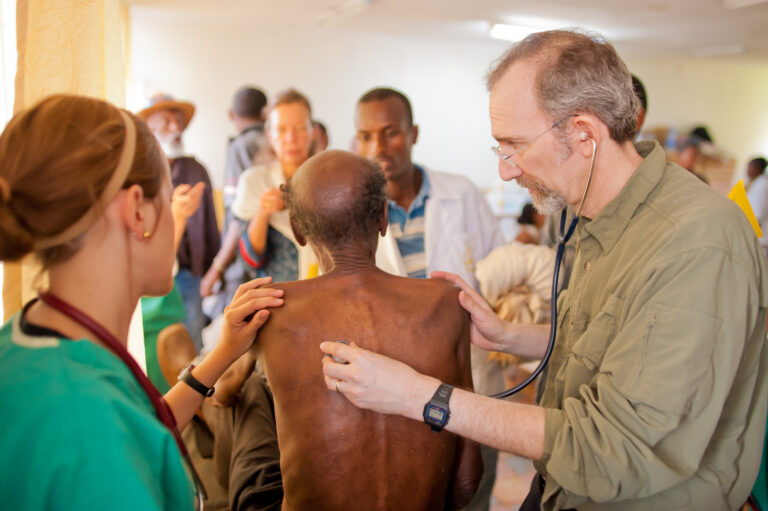
I was born and raised in New York. There were a number of things that led me to pursuing medical school at Columbia, but the thing that I remember most distinctly from my childhood was when my grandfather was sick. He had a brain tumor when I was in middle school, and I remember him saying to me that he thought the doctors were doing their best to help him and that it would be a wonderful idea if I were to become a physician so that I could help people like him too. He didn’t last much longer after that and passed away a few months later. I was very close to my grandfather, so that moment stuck with me and impressed upon me that becoming a physician was something good to do with my life. At that moment, I knew that I wanted to do the most that I could to give back to society, so I applied for a National Health Service Corps Scholarship while in medical school. I received the scholarship with the intention of serving as a primary care physician in underserved areas. I knew that they really wanted people to go into family medicine and that primary care doctors were needed throughout the country, so I made a commitment that I would go into family medicine to do the most I could for the community. After meeting my wife at Columbia, we both moved to Los Angeles for my family medicine residency at UCLA. At the time, I was planning to do full spectrum family medicine and was not thinking about dermatology at all. Dermatology was never the plan. It just kind of evolved.
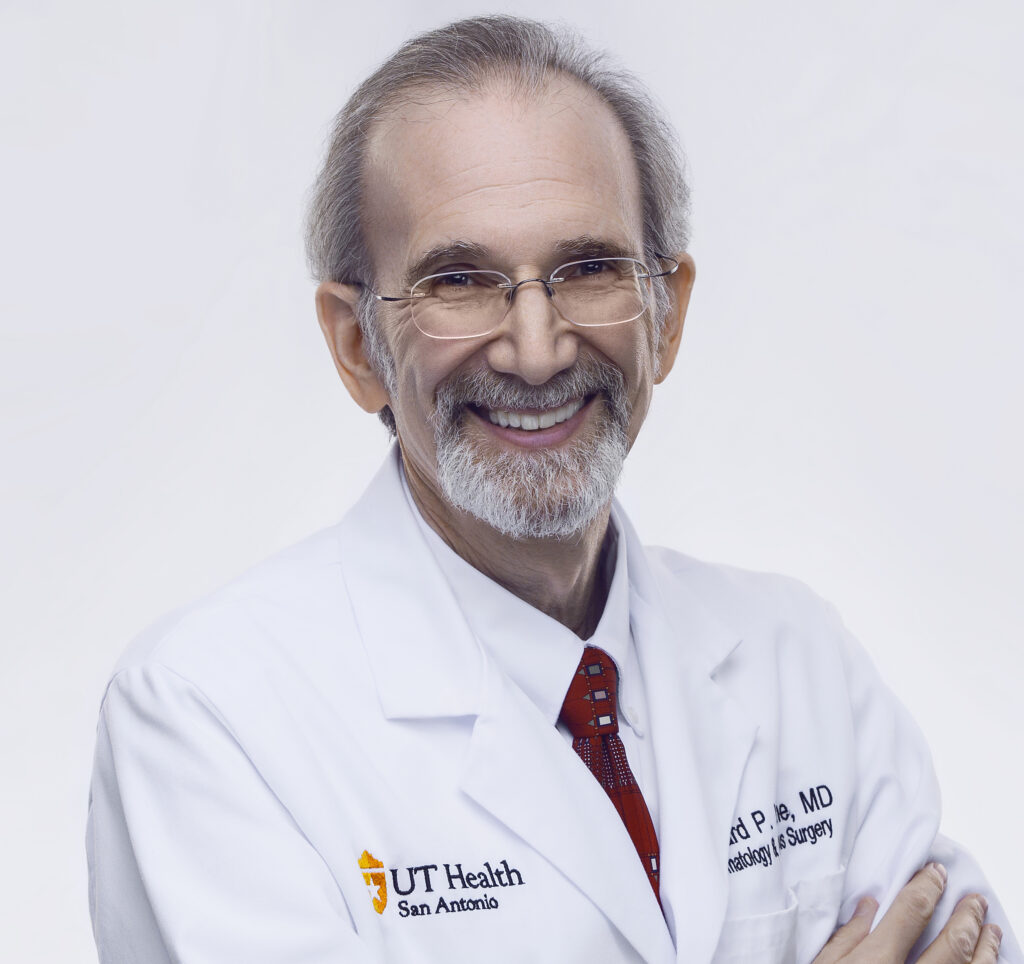
I had always been interested in art, spending years in high school and college studying art and doing art because it was something I enjoyed. I started doing photography very early on in life, and in fact, my first real camera was my grandfather’s old camera which was from the 1930s. I learned to do photography with everything being completely manual, including things like having an off camera light meter to get light measurements. I realized throughout my time in medicine that I really enjoyed visual diagnosis, and in fact started taking photographs of my patients and their clinical conditions as soon as I finished residency. At my first job in a free clinic in Venice, California, I kept my camera at work and started taking 35mm slides to help teach the students there. One of my best teachers and role models, Dr. Jimmy Hora, did a fabulous job educating us with images and had an incredible collection of photographs that he had taken. One of the topics he loved teaching was dermatology, so this sparked a great interest and connection for me. I never felt that dermatology was more important than any other part of medicine; it was just something that I particularly enjoyed and could incorporate my love of photography into.
My work with underserved communities goes all the way back to even before my time in the National Health Service Corps. However, it was right then and there where I immediately spent a good part of my day taking care of homeless people in Los Angeles and Venice, California. I really appreciated the work I got to do there and found that rewarding. After graduating from UCLA, I returned to the program to work full time as an adjunct professor. I worked with the medical students the following year to create UCLA’s first student-run free clinic in 1990. Over time, it went from one to three clinics, and I served as the faculty leader. When I came to San Antonio in 2003, I knew that was something I wanted to replicate. It actually wasn’t difficult to do because the students here were very enthusiastic about it. We founded Alpha Home in 2005 as our first site mainly because Alpha Home had expressed an interest in needing healthcare, so that became our first established free clinic at UT Health San Antonio. Over the past years, we have grown to become a robust student faculty collaborative practice that is now expanded to six different clinics including Alpha Home, Haven for Hope, Pride, Refugee Health, SAMM, and Travis Park clinic. I now serve as the medical director of the whole program with individual directors for each of the six clinics.
When I reflect on my years as a physician, there have been thousands and thousands of patient stories that have stood out to me. One in particular that I will never forget goes back many years ago to UCLA, where I helped care for a nurse aide. She was my patient, and I saw her for various different medical problems, but one day she revealed to me that she was suffering from addiction with cocaine and alcohol. She knew that she had to change because it was damaging her life, her career, and her family. She asked for help, so that’s what I did for her. I was there for her without being judgmental, and I can’t say I knew a lot about addiction at the time. In fact, I think I learned a lot about it from her, but I can say that I was there for her when she needed it. I didn’t prescribe any medication at all. I was just there as a supportive and concerned doctor, and she felt like she needed a connection outside of her home and family for help. Whenever she needed it, she would call to hear my voice and that helped to keep her going. Because of this, she was able to quit her addictions and join an addiction support group which was tremendously helpful for her. After a year of sobriety, she asked if I would come to her support group meeting and be the one to give her the one year sobriety medal. She ended up getting her job back, and she was even promoted to head nurse on the unit. It was very special that I knew that I had made a difference in her life – not just by making a diagnosis or prescribing medicine, but just being there for her. What I learned from her was really helpful in allowing me to help the hundreds of women that we have treated at Alpha Home.
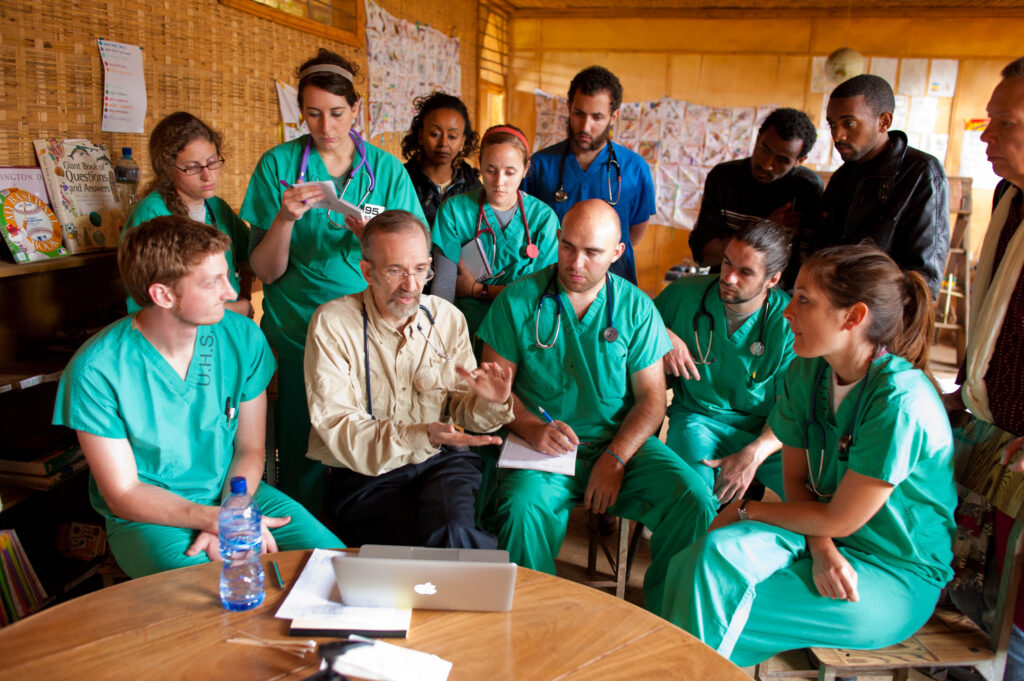
I advise and encourage all students who are interested in underserved care to take our courses about humanism in medicine at UT Health San Antonio. The door is always wide open for healthcare for the underserved, and there are many positions open in those communities. One of the reasons I’m passionate about the courses we teach is that we get to expose students, doctors, and other health professionals to underserved patients. I want to immunize these providers against the cynicism that can occur in medicine – the denigration that some patients experience because of their poverty, homelessness, mental illness, or substance abuse. I want to help them see the humanity and rewards of helping people that aren’t considered the special individuals of our society. They’re not glamorous, but they are people who need help. For those students or physicians who can help do that and who can really use their compassion and empathy for that, they’ll never regret it. When taking these thoughts into future practice, you don’t have to make vulnerable, underserved populations the only people you treat. It could be something that you can do as a little part of your practice or even volunteering during the week at a free clinic. You can choose to take care of these people because you care about caring, and you care about people. Whatever way it’s done, I just encourage more people to do that, and our world can be a better place. If more people could exercise their kindness to others, the world can be a better place.
Story: Marie Vu Photographs: Courtesy of Richard Usatine